
CELEBRITY
The world leaders joining Trump’s ‘board of peace’ – and those who declined

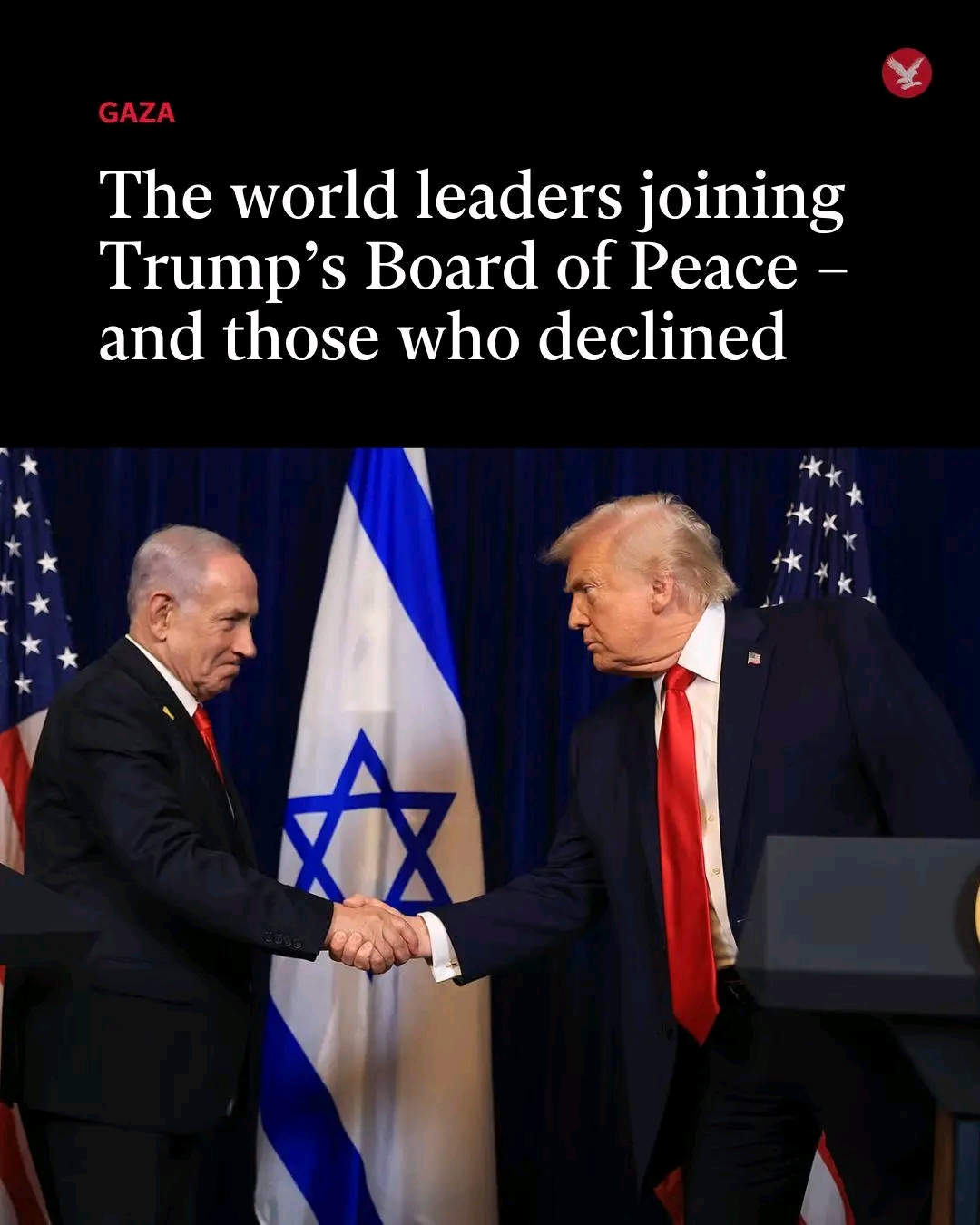
Donald Trump’s ambitious “board of peace”, initially conceived as a small group of global leaders overseeing the Gaza ceasefire, has significantly expanded its scope.
The Trump administration’s vision now encompasses a broader role, with Mr Trump extending invitations to dozens of nations and suggesting the board could soon mediate various international conflicts, akin to a pseudo-UN Security Council.
Further details are anticipated at the World Economic Forum in Davos, Switzerland, where Mr Trump is headed. Ahead of the summit, Israeli Prime Minister Benjamin Netanyahu confirmed on Wednesday his agreement to join the board, despite his earlier criticisms of the committee tasked with the Gaza ceasefire.
While the board’s official charter remains undisclosed, a draft version obtained by The Associated Press indicates that substantial power would be concentrated in Mr Trump’s hands. The draft also outlines that a $1 billion contribution would secure permanent membership.
The Trump administration now seems to envision the board of peace with a far broader scope beyond Gaza.
In letters sent Friday to various world leaders inviting them to the board, Trump said it would “embark on a bold new approach to resolving global conflict,” suggesting it could act as a rival to the UN Security Council, the most powerful body of the global organisation created in the wake of World War Two.
A draft charter for the board, obtained from a European diplomat and confirmed by a US official as accurate as of Monday, uses expansive language to describe its ambitions.
It emphasises “the need for a more nimble and effective international peace-building body” and says “durable peace” requires
the courage to depart from approaches and institutions that have too often failed”. It adds an aim to “secure peace in places where it has for too long proven elusive”.
Under the charter, the chairman — which Trump says will be him — has the power to invite member states, break any ties in a vote, decide how frequently it meets, and create or dissolve subsidiary entities.
The expenses of the peace board will be funded by contributions from member states, which serve three-year terms. Members who pay “more than one billion United States dollars in cash” during their first year can have a permanent place on the board, the draft says.
The draft is under constant revision, is not finalised, and may undergo significant changes, according to the US official, who was not authorised to comment publicly and spoke on condition of anonymity.
Countries around the world have been invited
So far, Israel, the United Arab Emirates, Pakistan, Morocco, Vietnam, Kazakhstan, Hungary, Argentina and Belarus have agreed to take part.
Netanyahu’s Wednesday announcement marked a switch from his previous stance. His office had said the composition of the Gaza executive committee — which includes Turkey, Israel’s key regional rival — ran “contrary to its policy,” without saying why.
Invitation letters from Trump have also been sent to Paraguay’s leader Santiago Peña, Canadian Prime Minister Mark Carney, Egyptian President Abdel-Fattah el-Sissi and Turkish President Recep Tayyip Erdogan. Also, Russia, India, Slovenia, Thailand and the European Union’s executive arm have said they received invitations.
The Kremlin is now “studying the details” and will seek clarity of “all the nuances” in contacts with the United States, Kremlin spokesperson Dmitry Peskov said. Trump confirmed on Monday night that Russian President Vladimir Putin had been invited.
It was not immediately clear how many, or which, other leaders would receive invitations.
Some US allies have already declined
France — which is at odds with the Trump administration over its desire to take over Greenland, a self-governing territory overseen by Nato ally Denmark — apparently doesn’t plan to join the board so far.
Yes to implementing the peace plan presented by the president of the United States, which we wholeheartedly support, but no to creating an organisation as it has been presented, which would replace the United Nations,” French Foreign Minister Jean-Noel Barrot said Tuesday.
Hearing late Monday that French president Emmanuel Macron was unlikely to join, Trump said, “Well, nobody wants him because he’s going to be out of office very soon.”
“I’ll put a 200 per cent tariff on his wines and Champagnes and he’ll join,” Trump told reporters. “But he doesn’t have to join.”
The other committees that will work with the board of peace
The White House said an executive board will work to carry out the vision of the board of peace.
The executive board’s members include US secretary of state Marco Rubio, Trump envoy Steve Witkoff, Trump’s son-in-law Jared Kushner, former British prime minister Tony Blair, Apollo Global Management CEO Marc Rowan, World Bank president Ajay Banga, and Trump’s deputy national security adviser Robert Gabriel.
The White House also announced the members of another board, the Gaza executive board, which, according to the ceasefire deal, will be in charge of implementing the tough second phase of the agreement. That includes deploying an international security force, disarming the Palestinian militant Hamas group and rebuilding the war-devastated territory.
Nickolay Mladenov, a former Bulgarian politician and UN Mideast envoy, is to serve as the Gaza executive board’s representative overseeing day-to-day matters. Additional members include: Witkoff, Kushner, Blair, Rowan, Turkish foreign minister Hakan Fidan; Qatari diplomat Ali Al-Thawadi; Hassan Rashad, director of Egypt’s General Intelligence Agency; Emirati minister Reem Al-Hashimy; Israeli businessman Yakir Gabay; and Sigrid Kaag, the Netherlands’ former deputy prime minister and a Mideast expert.
The board will also supervise a newly appointed committee of Palestinian technocrats who will be running Gaza’s day-to-day affairs.

Smutne święta Marcina Millera. Pierwsza taka Wielkanoc Czytaj więcej:

W czasie mszy w Wielki Piątek ksiądz ucałował dłonie nastolatki. Wierni oburzeni

Krzysztof Krawczyk zmarł 5 kwietnia [*] Tak dziś wygląda jego grób, jeden szczegół zwraca uwagę

Trump przeszedł samego siebie, po tych słowach huczy cały świat 😱

😮😳 Polityka Donalda Trumpa budzi niepokój w Europie. Ekspert mówi wprost o chaosie

Iga Świątek spędza święta wielkanocne w świetnym humorze. Na Instastory tenisistka pochwaliła się zdjęciem, do którego pozowała m.in. z tatą Tomaszem. Towarzyszył im ktoś jeszcze. 🟥 Link w komentarzu👇

Życiowy wynik Magdaleny Fręch. Zwrot w wielkim finale, pięć gemów z rzędu

Nowe stawki już od kwietnia. Do skrzynek trafiają zawiadomienia o podwyżkach

W Belfaście odbyło się niezwykłe wydarzenie, które przyciągnęło tłumy. Setki dronów stworzyły pełnowymiarową sylwetkę Titanica na nocnym niebie.

Orban zwołuje pilną naradę. Materiały wybuchowe przy gazociągu

Podwyżki KRUS dla rolników. Nowe stawki już od kwietnia
