
CELEBRITY
Trump Deepens Dollar Woes, Saying He’s Not Concerned About Slump

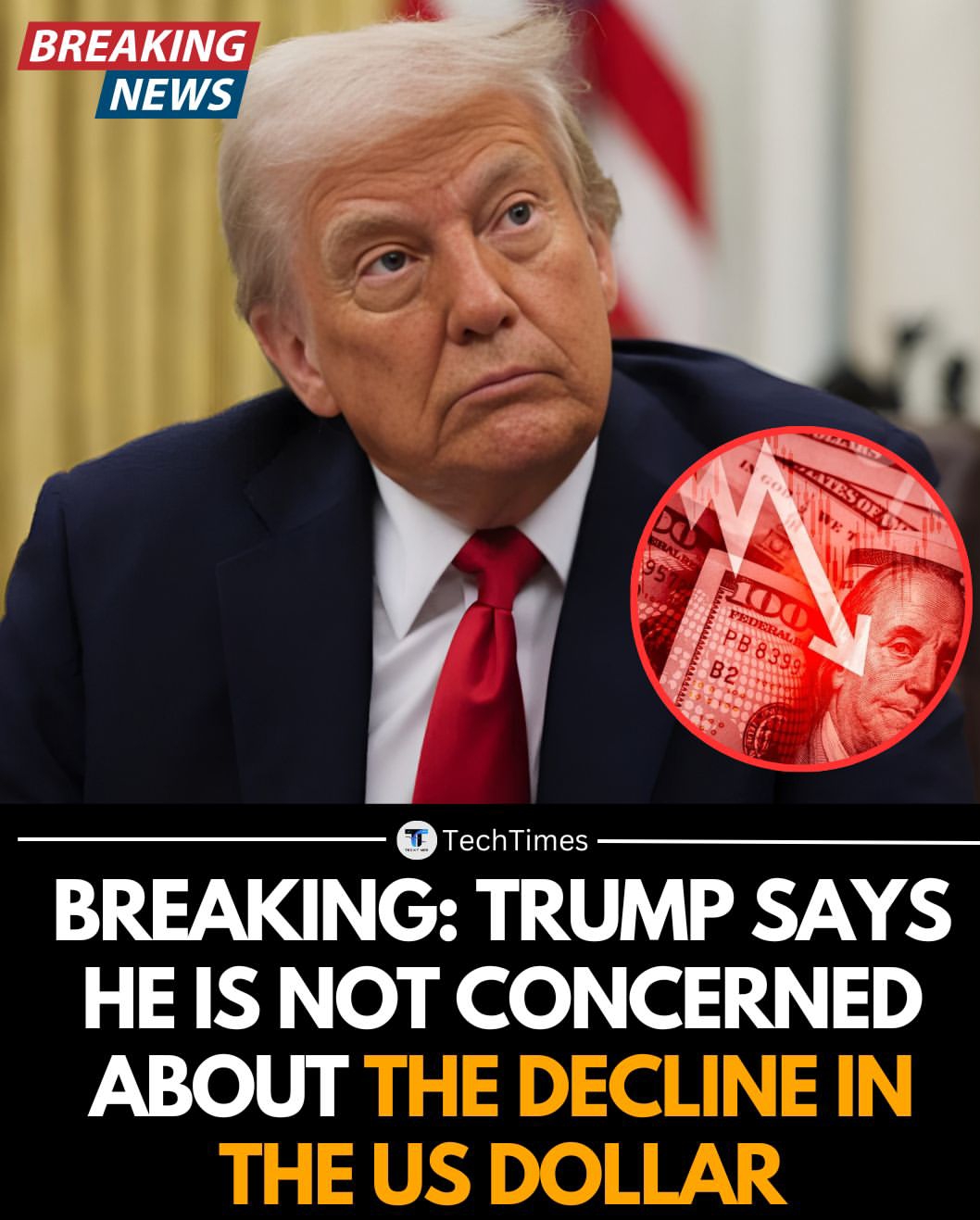
President Donald Trump indicated he’s comfortable with the dollar’s recent decline, helping send the currency to its lowest level since early 2022.
“No, I think it’s great,” Trump told reporters in Iowa on Tuesday when asked if he was worried about the currency’s drop. “I think the value of the dollar — look at the business we’re doing. The dollar’s doing great.”
Trump’s comments added fuel to what was already the dollar’s deepest drop since his tariff rollout sent markets into a tailspin last year, fanning fears that his erratic policy shifts would drive overseas investors to pull back from the US. After he spoke, the Bloomberg Dollar Spot Index extended losses to as much as 1.2%, as the US currency weakened against all of its major counterparts before steadying somewhat in Asia trading Wednesday.
The president has long accused other countries of seeking weaker exchange rates to boost exports, and Treasury Secretary Scott Bessent has highlighted the distinction between the dollar’s price and its value as a reserve currency. So these latest comments were seen as giving a green-light to traders to sell the greenback.
Many in the Trump cabinet want a weaker dollar in order to make exports more competitive,” said Win Thin, chief economist at Bank of Nassau. They’re “taking a calculated risk. A weaker currency can be nice until things get disorderly.”
Some of the decline in the dollar had been caused by the abrupt rebound in the yen since last week, as traders braced for a potential intervention by Japanese officials to prop up that nation’s currency.
But the dollar’s drop has also been fanned by Trump’s unpredictable policymaking, which has rattled overseas allies and investors: His threats to take over Greenland; his pressure on the Federal Reserve; tax cuts that deepened the deficit; and a leadership style that’s deepened US political polarization.
Read more: Trump Is Driving Off Investors and Imperiling Dollar’s Reign
The weakness has come despite a rise in government bond yields and expectations that the Fed is poised to pause its interest-rate cuts at at its meeting this week — both of which would traditionally have been seen as supportive of the currency. Indeed, Trump has been vocal in his desire that rates should be much lower, something which would further weigh on the dollar.
That has helped push investors into rival stores of value such as gold, sending bullion to record highs, in what’s becoming known as the debasement trade. They are also pouring cash into assets like emerging-market funds at a record pace as momentum builds for a rotation out of US holdings more broadly, a move some have called a “quiet-quitting.”
What Bloomberg Strategists say…
“Today’s move in the dollar may look overdone considering rate differentials remain in its favor against many peers. But, President Trump’s remarks underscore the lingering risks that will continue to batter the currency and encourage investors to seek cover elsewhere.”
—Tatiana Darie, Macro Strategist, Markets Live
For years Trump has held competing views on the dollar, touting its strength as a way to preserve an edge in bilateral negotiations while also talking up the benefits of a weak greenback for the manufacturing sector. “I’m the person that likes a strong dollar, but a weak dollar makes you a hell of a lot more money,” he said last year.
Still, any prolonged weakening of the dollar could bring with it a number of dangers for the US economy.
“It is true, a weaker dollar boosts exports. However, the United States has $39 trillion of debt on its way to $40 trillion plus, and when you have that much debt, I think stability of the currency probably trumps exports,” Robert Kaplan, vice chairman at Goldman Sachs Group Inc., said in an interview on Bloomberg Television.
“I actually think the US is going to want to see a stable dollar and wants to see stability. They want to be able to sell the long end of the Treasury curve: a stable dollar helps,” he said.
Read more: Dollar’s ‘Relentless’ Slide Has Traders Bracing for More Pain
Since Trump’s inauguration, Bloomberg’s gauge of the US currency has tumbled close to 10% and traders are wagering on further losses.
The premium for short-dated options that profit from a weaker US currency reached the highest since Bloomberg began compiling the data in 2011. Bullish expectations for other currencies have also reached multi-month highs, near or on a par with levels seen in the aftermath of the April tariff rollout.
Trading volumes have been heavy. On Monday, turnover through the Depository Trust & Clearing Corp. hit the second-highest on record, surpassed only by April 3, 2025.
At least one metric suggests the dollar remains richly valued.
On a purchasing power parity basis, the US currency is overvalued against all of its Group-of-10 peers except the Swiss franc, according to data from the Organisation for Economic Co-operation and Development. The yen and euro are particularly undervalued, the measure showed, supporting claims that exporters in Europe and Japan have an unfair advantage.
Trump on Tuesday suggested he could manipulate the strength of the dollar, saying “I could have it go up or go down like a yo yo.” But he cast that as an unfavorable outcome, likening it to hiring unneeded workers to juice employment numbers and criticized Asian economies he said tried to devalue their currencies.
“If you look at China and Japan, I used to fight like hell with them, because they always wanted to devalue their yen. You know that? The yen and the yuan, and they’d always want to devalue it. They devalue, devalue, devalue,” Trump said Tuesday.
And I said, not fair that you devalue, because it’s hard to compete when they devalue. But they always fought, no our dollar’s great,” he said.

Stylizacja z przekazem 👇

Było o krok od krępującej sytuacji 🤭

Decyzja o odejściu definitywnie zapadła😱

Tego chyba nie było w planie 🥹

Sprawa śmierci Łukasza Litewki. Prokuratura składa zażalenie na decyzję sądu

Czegoś takiego jeszcze nie było 😳😳

Była wolontariuszką Litewki. Mówi, co działo się w jego domu

Miller ostro o Tusku. Tak skomentował jego wystąpienie Czytaj więcej:

Widzowie nie są zachwyceni tą decyzją…

Piotr Kędzierski tuż przed ogłoszeniem werdyktu przez Krzysztofa Ibisza przejął mikrofon i oświadczył, że rezygnuje z “Tańca z gwiazdami”. Link w komentarzu

Ciężko uwierzyć :(
