
CELEBRITY
TRUMP QUIETLY HOSTS A PRIVATE SCREENING OF MELANIA’S DOCUMENTARY — AN EMOTIONAL MOMENT THAT LEFT HER IN TEARS AND SPARKED DEBATE1

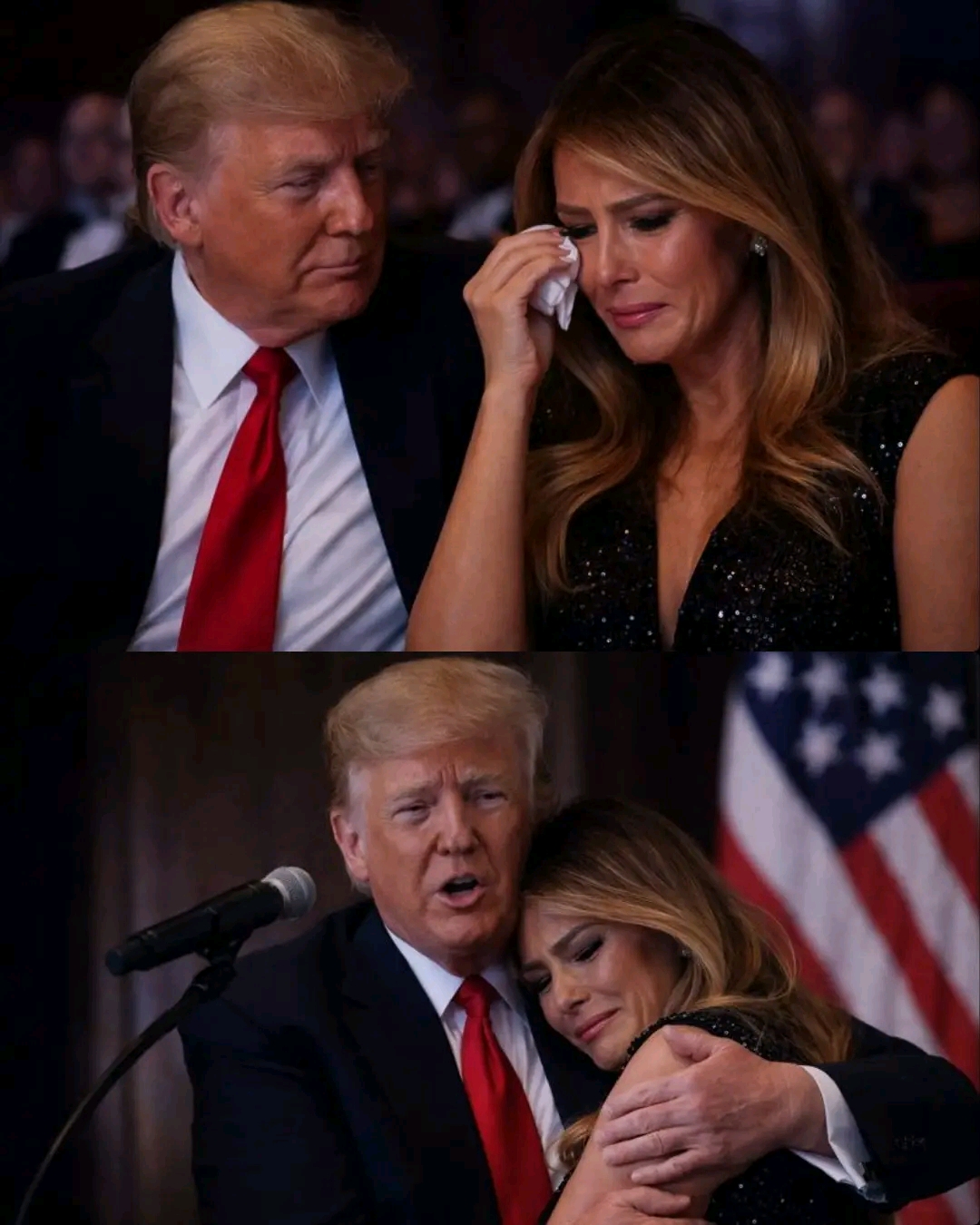
On a quiet evening inside the White House, far from press briefings and camera flashes, an unusually intimate event took place — one that would soon ripple far beyond the room where it happened.
Donald Trump had invited a small, carefully selected group of guests to a private screening of Amazon’s upcoming documentary about Melania Trump. The guest list was short and deliberate. Among those present were filmmaker Brett Ratner and boxing legend Mike Tyson, alongside a handful of longtime friends and trusted associates. There were no reporters, no official photographers, and no public schedule entry acknowledging the event.
From the beginning, the message was clear: this night was not for headlines.
The screening was held in a smaller White House viewing room rather than a grand hall. Attendees described the atmosphere as restrained and respectful, more like a private family gathering than a political or cultural premiere. Phones were put away. Conversations were kept low. Even Trump, known for commanding attention, remained unusually reserved as guests took their seats.
For Melania Trump, the evening carried particular weight.
The documentary, produced for Amazon, traces her life across continents and decades — from her upbringing in Slovenia, through her years in the fashion world, and into her role as First Lady under relentless global scrutiny. According to those who attended the screening, the film does not shy away from difficult moments. It addresses isolation, pressure, and the personal cost of living under constant observation.
As the lights dimmed, Melania sat quietly beside Trump. Those nearby noted that she watched intently, hands folded, her posture composed but tense. For her, this was not simply a film. It was a public retelling of a life she had largely guarded in private.
The decision to host the screening without press immediately sparked speculation once word of the event began circulating. Supporters interpreted it as a sign of respect — a way to honor Melania’s story without turning it into spectacle. Critics, however, questioned the symbolism of unveiling such a personal narrative behind closed doors at the White House, reading deeper political or strategic meaning into the choice.
Yet those present insist the motivation was far simpler.
“This wasn’t about messaging,” one attendee said. “It was about control and privacy. Melania wanted the first viewing to be human, not performative.”
As the documentary unfolded, the room remained still. Scenes depicting Melania’s early years were met with quiet attentiveness. Later segments, showing the pressures of public life and the strain of constant judgment, visibly affected her. At several points, she lowered her gaze, blinking back emotion.
Trump, for his part, barely looked away from the screen.
Those seated nearby noticed subtle changes in his demeanor as the film progressed. At moments where Melania described feeling alone or misunderstood, Trump shifted in his chair. When archival footage showed her navigating public criticism during her years as First Lady, his jaw tightened.
Then came the moment that would define the night.
Near the end of the documentary, a sequence focused on Melania’s private resilience — moments never photographed, conversations never recorded, choices made away from the spotlight. The narration slowed. The music softened. The room seemed to shrink around the screen.
As the final scene faded to black, there was no immediate applause.
Instead, there was silence.
Melania remained still for several seconds, her eyes fixed forward. Then she turned slightly toward Trump. Those closest to them described what happened next not as dramatic, but as deeply personal.
Trump reached for her hand.
It was not a gesture for anyone else in the room. There was no attempt to perform or signal. He leaned in and spoke quietly to her — a few words, meant only for her to hear.
Melania’s composure broke.
Her eyes filled with tears as she looked back at him, visibly moved. She nodded once, pressing her lips together as if to steady herself. Trump did not smile broadly or speak further. He simply held her hand, his expression softening into something rarely seen in public — unguarded pride mixed with concern.
Several attendees later said that moment lingered longer than the film itself.
“It wasn’t about politics or image,” one guest recalled. “It was about a husband seeing his wife’s story laid bare — and realizing how much she carried quietly.”
After the lights came back on, there were no speeches. No remarks to the room. Guests remained seated for a moment, allowing Melania space. When she finally stood, a few approached to offer quiet words of support. Trump stayed close, his hand resting lightly at her back.
The screening ended without ceremony.
Guests departed discreetly, instructed not to discuss details publicly. Yet as often happens with moments of significance, fragments of the story found their way out. Not through official statements, but through whispered accounts that emphasized the same thing again and again:
As anticipation builds for the documentary’s public release, the private nature of this first screening has only intensified curiosity. Viewers are now wondering which moments moved Melania so deeply — and what parts of her life, long shielded from view, will finally be seen.
For critics, questions remain about timing and symbolism. For supporters, the night stands as a reminder that behind public roles are private lives rarely understood in full.
But for those who were in the room, the memory is simpler.
It was a husband and wife, sitting side by side, watching a life story unfold — and confronting, together, the weight of everything it took to live it.
Whatever debates the documentary may spark once it reaches a wider audience, one thing is clear:
that evening at the White House was never meant to persuade the public.
It was meant to honor a story — and the woman who lived it.
Washington, D.C. is once again at the center of a historic political storm as impeachment proceedings against former President Donald Trump erupt for a third time in just six years.
In a development that few observers predicted, 47 Republican members of the U.S. House of Representatives have formally joined Democrats in supporting impeachment, pushing the total number of lawmakers backing the measure to 212.
This unprecedented defection from within Trump’s own party signals a dramatic shift in the political landscape and raises profound questions about party loyalty, constitutional responsibility, and the future of American governance.

Smutne święta Marcina Millera. Pierwsza taka Wielkanoc Czytaj więcej:

W czasie mszy w Wielki Piątek ksiądz ucałował dłonie nastolatki. Wierni oburzeni

Krzysztof Krawczyk zmarł 5 kwietnia [*] Tak dziś wygląda jego grób, jeden szczegół zwraca uwagę

Trump przeszedł samego siebie, po tych słowach huczy cały świat 😱

😮😳 Polityka Donalda Trumpa budzi niepokój w Europie. Ekspert mówi wprost o chaosie

Iga Świątek spędza święta wielkanocne w świetnym humorze. Na Instastory tenisistka pochwaliła się zdjęciem, do którego pozowała m.in. z tatą Tomaszem. Towarzyszył im ktoś jeszcze. 🟥 Link w komentarzu👇

Życiowy wynik Magdaleny Fręch. Zwrot w wielkim finale, pięć gemów z rzędu

Nowe stawki już od kwietnia. Do skrzynek trafiają zawiadomienia o podwyżkach

W Belfaście odbyło się niezwykłe wydarzenie, które przyciągnęło tłumy. Setki dronów stworzyły pełnowymiarową sylwetkę Titanica na nocnym niebie.

Orban zwołuje pilną naradę. Materiały wybuchowe przy gazociągu

Podwyżki KRUS dla rolników. Nowe stawki już od kwietnia
