
CELEBRITY
Just In: Trump Tells Iran to Surrender After Claiming Its Military Is “Gone” — The Statement That’s Shaking the World.

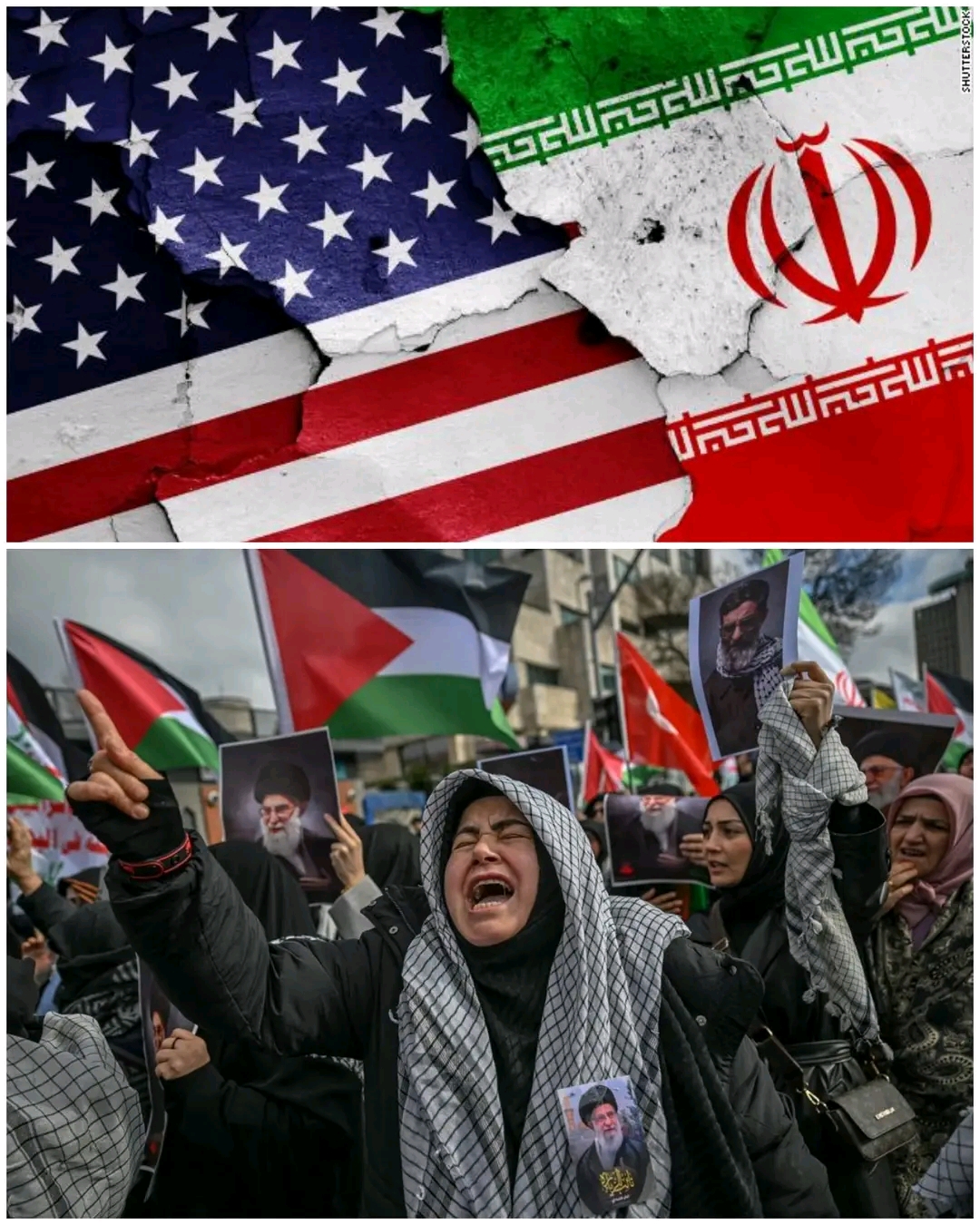
The Middle East entered another volatile night as explosions illuminated the skies above Tehran while retaliatory missile strikes streaked across Israeli cities.
What began days earlier as targeted military operations has rapidly evolved into a regional crisis, with escalating attacks, mass evacuations, and increasingly dramatic political rhetoric from world leaders.
Late in the evening, U.S. President Donald Trump delivered one of his strongest messages yet to Iran’s leadership.
Standing before reporters at the White House, he called on the Iranian regime to surrender and urged members of its powerful military institutions—including the Revolutionary Guard, the army, and police forces—to lay down their weapons.
According to the president, continuing to fight would only lead to certain death.
He framed the conflict not only as a military confrontation but as a turning point for the Iranian people, urging them to rise up and reclaim their country.
Trump also claimed that American and Israeli forces had already inflicted devastating damage on Iran’s military capabilities.
He said that roughly two-thirds of Iran’s missile launchers and missile stockpiles had been destroyed through an intense wave of airstrikes over the past several days.
According to his assessment, the campaign had progressed faster than expected, describing it as the “total demolition of the enemy’s offensive capability.”
Despite the aggressive tone, the president suggested that his objective was not necessarily a complete regime overhaul in Iran.
Instead, he described a strategy similar to what he previously pursued in Venezuela—removing the leadership at the top while shaping what comes next.
Trump went even further by saying he believed the United States should play a role in deciding who would replace Iran’s recently assassinated Supreme Leader, Ayatollah Ali Khamenei.
One of the most widely discussed potential successors is Khamenei’s second son, Mojtaba Khamenei, a hardline cleric believed to have strong ties to the Revolutionary Guard.
However, Trump dismissed the possibility outright, calling him “unacceptable” and warning that installing such a figure would likely lead to renewed conflict with the United States within five years.
While the political drama unfolded in Washington, the situation on the ground in Iran remained grim.
In Tehran, explosions continued to echo through residential neighborhoods as Israeli and American strikes targeted what they described as military infrastructure.
Several areas across the capital sustained significant damage, with buildings destroyed and smoke rising across the skyline.
One major site struck was the Azadi sports complex in western Tehran.
Israeli officials claimed the facility had been used as a gathering point for security forces loyal to the regime.
However, the surrounding districts are densely populated civilian areas, raising concerns about the risk to ordinary residents caught in the conflict.
For many people living in the city, daily life has become a constant exercise in survival.
Residents described staying indoors as much as possible to avoid being caught in the middle of an airstrike.
Some said the continuous sound of explosions has become emotionally exhausting, creating a sense of anxiety that never fully fades.
Others expressed frustration not only with the war itself but also with the political leadership that led the country into this moment.
While some citizens quietly welcomed pressure on the ruling clerical establishment, they also feared what the future might bring.
Official figures from the Iranian Red Crescent indicate that nearly 800 people have been killed since the start of the conflict.
Meanwhile, U.S. officials say more than 2,000 military targets have been struck during the campaign so far.
As the bombardment continues, thousands of Iranians are attempting to flee the country.
At border crossings with Turkey, long lines of people have formed as families seek safety away from the fighting.
Some travelers described the emotional pain of leaving their homes behind while uncertain whether they would ever return.
One man crossing the border explained that although he was leaving temporarily for safety, Iran would always remain his home.
Others said they were simply trying to protect their families from a war that could reach any neighborhood without warning.
The conflict has also spread far beyond Iran’s borders.
In Israel, air raid sirens sounded once again across Tel Aviv as Iranian missiles were launched toward the city.
Israeli air defense systems intercepted many of the incoming weapons, though several explosions were heard as interceptors struck their targets in the night sky.
Reports also indicated that Iran had used a cluster-type missile during one of the attacks.
Such weapons release smaller explosives over a wide area and are banned under international conventions, though Iran is not a signatory to those treaties.
Elsewhere in the region, tensions are growing as neighboring countries brace for possible escalation.
In the United Arab Emirates, authorities reported intercepting multiple Iranian missiles and more than one hundred drones in a single day.
Emergency alerts were sent to mobile phones across Dubai, warning residents to seek shelter as a precaution.
For a city that has long promoted itself as a symbol of stability and luxury in the Middle East, the sudden presence of missile warnings has been deeply unsettling.
Tens of thousands of foreign nationals—including around 140,000 British citizens registered with the UK government—are now monitoring the situation closely.
Some governments have already begun evacuating their citizens.
The United Kingdom has launched charter flights from the region to bring stranded nationals home while also deploying additional military assets to protect its bases and personnel.
British Prime Minister Keir Starmer announced that four additional Typhoon fighter jets would be sent to Qatar to strengthen defensive operations across the region.
Meanwhile, RAF bases in Cyprus have been placed on heightened alert after drones struck infrastructure there earlier in the week.
Military activity has also intensified in Lebanon, where Israel says it is targeting positions held by Hezbollah, the Iranian-backed militant group.
Large sections of Beirut’s southern suburbs have been placed under evacuation orders as residents rush to leave areas believed to contain military infrastructure.
Scenes of traffic gridlock and panic have emerged across parts of the Lebanese capital as thousands attempt to escape potential bombing zones.
Many families say they were given little time to leave their homes before the strikes began.
Amid the growing chaos, legal experts and international organizations are increasingly questioning the legitimacy of the military campaign.
Under international law, countries are generally prohibited from attacking another nation unless acting in self-defense or with authorization from the United Nations.
The United States has argued that the strikes were necessary to eliminate imminent threats posed by Iran’s regime.
However, critics say Washington has not presented clear evidence that such threats existed.
Despite these debates, the war continues to escalate.
With new strikes occurring almost daily and diplomatic solutions appearing increasingly distant, many observers fear the conflict could spiral into a much broader regional confrontation.
For now, cities across the Middle East remain on edge, their skies lit by missiles and interceptors while civilians wait anxiously to see what the next day will bring.

🔥 “History Just Shifted at Canterbury Cathedral — Is This the Moment That Signals Prince William’s Future Coronation?”

👑 This Quiet Moment Between Queen Elizabeth II and Princess Charlotte Says More Than Words Ever Could… Did You Notice It?

Wstrząsające doniesienia 😨😨 Polacy się tego nie spodziewali

Kim Clijsters przez trzy lata (2009-2011) z sukcesami współpracowała z Wimem Fissettem, a teraz w podcaście “Love All” staje w jego obronie tuż po tym, jak został zwolniony przez Igę Świątek. Belgijka nie widzi jednak największego problemu Polki w trenerze. — Widać było, że od kilku miesięcy jest w niej spore napięcie i frustracja — tłumaczy i zwraca uwagę na… Darię Abramowicz. 🟥 Link w komentarzu👇

Tragedia podczas wjazdu autokaru na prom. Nie żyje co najmniej 26 osób

Wiadomość z ostatniej chwili❗️❗️ Kibice zamarli 😨

Co oni zrobili?!

Co tam się dzieje 🤯

Kamery wszystko uchwyciły 👇

— Przy tych prędkościach nie trzeba dużo, żeby później “zaryć” o zeskok, a było takie ryzyko — mówił wprost Dawid Kubacki po kwalifikacjach w Planicy. Opady mokrego śniegu przysporzyły organizatorom sporo kłopotów. Niestety wygląda na to, że w piątek również nie obędzie się bez problemów. Słoweńska Agencja Ochrony Środowiska rozsyła alerty i informuje o “czerwonym ostrzeżeniu”. 🟥 Link w komentarzu👇

Opinie Polaków nie zostawiają złudzeń, takiej burzy w komentarzach jeszcze nie było
