
CELEBRITY
Patrick Mahomes has been carrying franchises since he first stepped under center for the Kansas City Chiefs. MVP seasons. Deep playoff runs. Rings. Standard-setting performances when the lights are brightest.

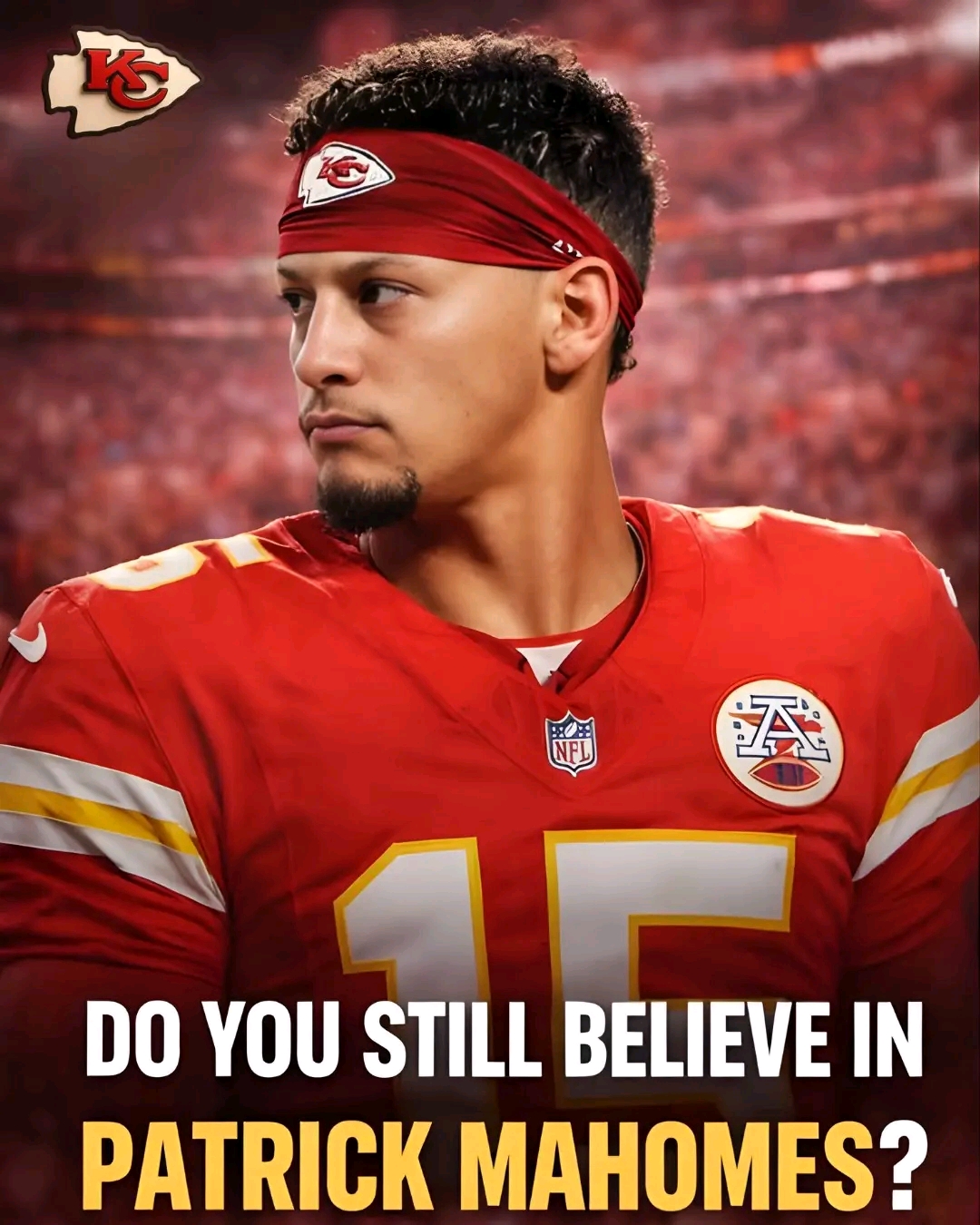
The 2025 season will forever be remembered in Kansas City not for a Super Bowl parade, but for the moment the invincibility of Number 15 was truly tested. After a grueling campaign that saw the Chiefs stumble to a 6-11 finish and miss the playoffs for the first time in over a decade, the narrative has shifted from “dynasty” to “recovery.”
But for Patrick Mahomes, “down” doesn’t mean “out.” It just means the revenge tour has an earlier start date.
The “tough year” reached its breaking point on December 14, 2025, during a critical Week 15 matchup against the Chargers. Mahomes suffered a devastating torn ACL and LCL in his left knee—the first major, season-ending injury of his legendary career.
He underwent successful surgery on December 15, performed by Dr. Dan Cooper, and immediately pivoted from playbook study to grueling rehabilitation. While the typical recovery window for such an injury is nine to twelve months, Mahomes has made his 2026 intentions crystal clear:
“I will be back stronger than ever,” Mahomes vowed to Chiefs Kingdom. “All we can do now is trust in God and attack every single day over and over again.”
The 2026 Outlook: Hungry and Reloaded
As of February 2026, Mahomes is deep into his rehab program in Kansas City, working alongside his trusted physical therapist, Julie Frymyer. His goal? Week 1 of the 2026 season.
But Mahomes isn’t just coming back to the same team. The front office, led by Brett Veach, is using this uncharacteristic “early offseason” to retool a roster that looked fatigued in 2025.
The #9 Draft Pick: For the first time in years, the Chiefs hold a top-10 selection in the April 2026 NFL Draft. Expect them to use this “silver lining” to find a game-changing wide receiver or bolster an offensive line that struggled to protect Mahomes last year.
A Refined Offense: With a healthy Mahomes returning, the focus is on easing his burden. The 2025 season proved that even the “Magic Man” can’t do it alone; expect a renewed emphasis on the rushing attack to take the pressure off his reconstructed knee.
The Veteran Anchor: Despite the rumors, Travis Kelce is expected to return for the 2026 campaign, providing Mahomes with his most reliable safety net as he finds his rhythm again.
History is littered with greats who were written off after a major injury, only to return with a chip on their shoulder. Mahomes is 30 years old, entering the prime of his mental processing of the game. If the 2025 season was a “fatigue tax” paid for seven years of dominance, then 2026 is the year the debt is settled.
The schedule is already set, with high-stakes matchups against the Bills, Bengals, and 49ers on the horizon. Mahomes isn’t just returning to play; he’s returning to reclaim the AFC West and remind the league that the road to the Super Bowl still runs through Arrowhead.
He’s been carrying the team since day one. In 2026, he’s coming back to carry the trophy. Bet on it.
In a rare and deeply personal admission, veteran journalist Bret Baier revealed a lingering sense of guilt that continues to shape how he sees himself—not as a public figure, but as a parent. Baier stated that he does not feel he merits being referred to as “father” by his son Paul, believing he was unable to “handle this” in a way that could have spared the boy from enduring multiple surgeries related to a congenital heart condition.
The words were not delivered for shock value. They came quietly, weighted with reflection, and struck a chord precisely because of their restraint. For a man accustomed to asking the hard questions on national television, this was a moment of turning the lens inward—toward vulnerability, regret, and the limits of control.
Paul’s medical journey has been marked by complexity and uncertainty. Born with a serious heart condition, he has undergone multiple surgeries from a young age—procedures that required not only medical precision but emotional endurance from the entire family. While Baier has previously spoken about his son’s resilience and the skill of the doctors involved, this moment focused less on survival and more on self-reproach.
“I couldn’t handle this,” Baier said, referring not to a single decision or moment, but to the broader reality of being unable to prevent pain. In his mind, fatherhood is measured by protection, and protection, in this case, felt impossible.
For many parents listening, the sentiment was painfully familiar. Chronic illness in a child often brings with it an unrelenting sense of responsibility, paired with the cruel truth that love does not grant control over biology. Baier’s statement exposed that tension without softening it—acknowledging that even access to top-tier medical care and information does not erase the helplessness parents feel when their child suffers.
What makes Baier’s admission particularly striking is his insistence that the title of “father” must be earned through action—and that, in this case, he believes he fell short. He spoke not as someone seeking absolution, but as someone wrestling with an internal standard he has yet to meet.
Those close to the family have emphasized that Baier has been a constant presence throughout Paul’s medical journey—attending appointments, advocating for care, and supporting his son emotionally. Yet the dissonance between effort and outcome has left a mark. In Baier’s framing, showing up was not the same as shielding, and shielding was the metric by which he judged himself.
Medical experts often remind families that congenital conditions are not caused or cured by parental choices. Still, logic rarely quiets the emotional aftermath. Baier’s words reflect a deeper truth about parenthood: that love often expresses itself as self-blame when circumstances turn cruel.
The reaction to Baier’s comments has been swift and empathetic. Parents of children with serious medical conditions shared messages of support, urging him to reconsider his definition of fatherhood. Many noted that enduring surgeries, setbacks, and hospital corridors alongside a child is itself an act of profound parental strength.
Yet Baier has not walked back his statement. If anything, he has allowed it to stand as an honest reflection of how the experience changed him. He acknowledged the extraordinary courage his son has shown and credited medical teams for making survival possible, but he did not absolve himself of the feeling that he could have done more—even if “more” is undefined.
That ambiguity may be the point. Illness rarely offers clear villains or clean resolutions. It leaves families navigating emotional gray zones long after physical scars heal. Baier’s struggle with the word “father” underscores how those gray zones can linger, shaping identity and self-worth in unexpected ways.
Despite the weight of his words, Baier also expressed pride in Paul’s resilience and spirit. The boy’s ability to face repeated surgeries has become a source of quiet inspiration within the family—a reminder that strength can emerge even when protection fails. In that light, Baier’s reflection is less an indictment of himself and more an acknowledgment of the cost of loving deeply in circumstances defined by uncertainty.
Ultimately, Baier’s statement resonates because it rejects easy narratives. It does not frame parenthood as heroism or suffering as redemption. Instead, it presents a father grappling with the limits of what love can prevent—and what it must endure.
Whether or not Baier believes he deserves the title, his willingness to voice this pain has offered something meaningful to others walking similar paths: permission to admit that doing everything right does not always feel like enough, and that the hardest part of parenthood is accepting what no parent can control.

ROYAL SHOCKER: Meghan Markle Drops a Stunning Ultimatum to King Charles — And the Palace Isn’t Ready 😳👑

Kościół w Polsce przygotowuje się na wypadek konfliktu. Jest gotowy na najgorszy scenariusz

Kryzys będzie tylko się nasilał. To może być wyjątkowo trudne lato dla branży lotniczej

Ludzie byli przerażeni 😱

Prezydent Karol Nawrocki podjął dwie kluczowe inicjatywy dla polskiej wsi. Co zawiera specjalny list do premiera Tuska?

Ale przystojniak! 😍

— Zostanę tu na długo. Pamiętajcie, że Real Madryt to klub moich marzeń — powiedział Vinicius Junior. Ma zarabiać ogromne pieniądze. 🟥 Link w komentarzu👇

“Umowa była taka, żeby ‘nie cisnąć’ na maksa, to nie odpuścił i 150 kg na ławce pękło!” – chwalił prezydenta Pudzianowski

To najgorsze miejsca w samolocie. Koniecznie ich unikaj lecąc na urlop
