
CELEBRITY
Supreme Court Blockbusters Will Impact Trump’s Presidency

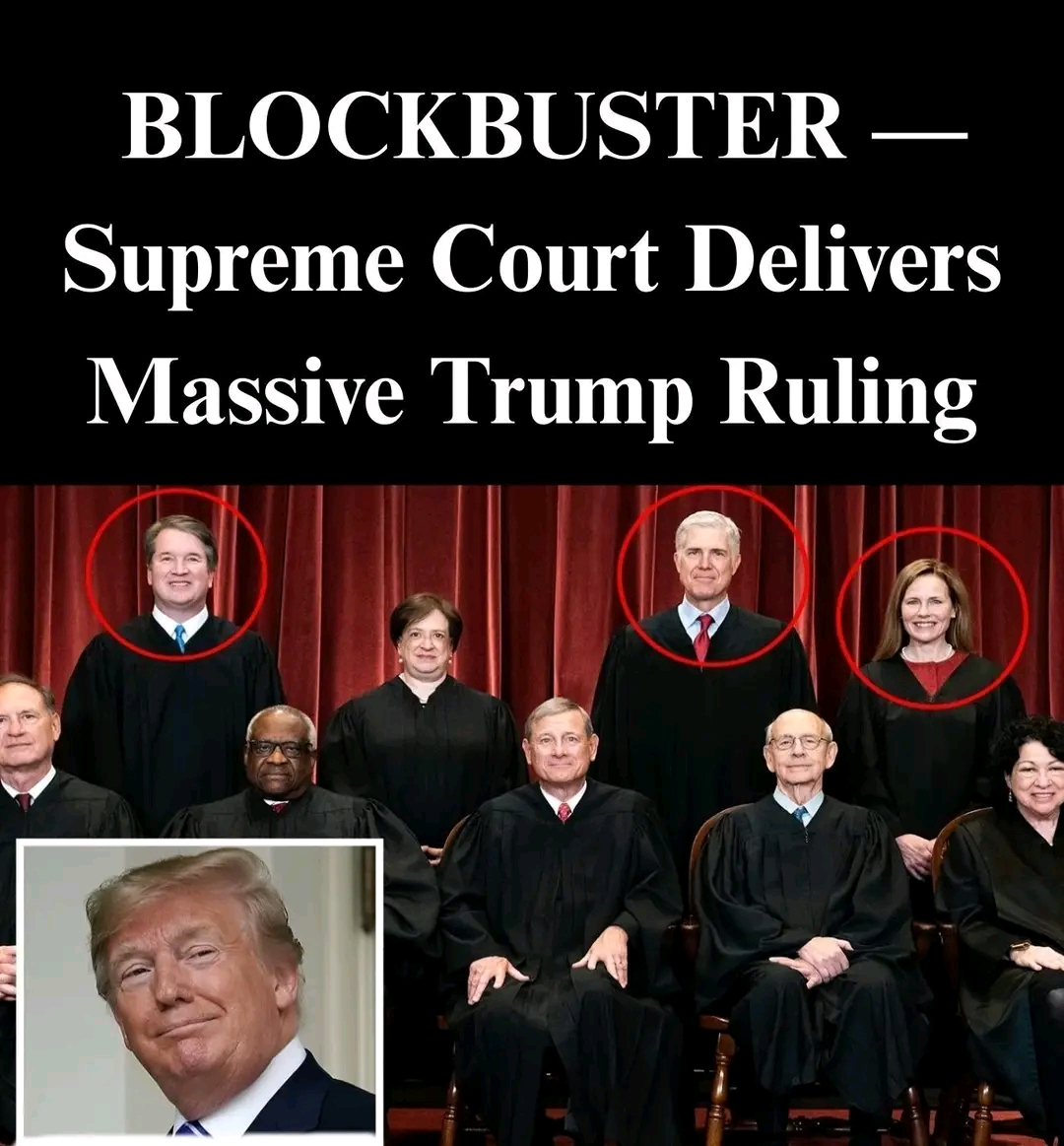
President Donald Trump spent the first year of his second term issuing an unprecedented volume of executive orders aimed at rapidly advancing his policy agenda, including sweeping reductions to federal agencies, a hardline immigration crackdown, and the use of emergency authority to impose broad tariffs on U.S. trading partners.
The pace of Trump’s executive actions has exceeded that of recent presidents, allowing the administration to act quickly on campaign promises, Fox News reported.
The aggressive strategy has also triggered a flood of lawsuits, setting up a series of high-stakes legal battles over the scope of presidential authority under Article II of the Constitution and the role of the courts in reviewing executive action.
Legal challenges have targeted some of Trump’s most consequential orders, including efforts to restrict birthright citizenship, bar transgender service members from the military, implement sweeping government cuts overseen by the Department of Government Efficiency, and federalize and deploy National Guard troops.
Many of those legal disputes remain unresolved.
Only a limited number of cases tied to Trump’s second-term agenda have reached final resolution, a reality legal experts say is significant as the administration continues to push forward.
WINS
Limits on nationwide injunctions
In June 2025, the Supreme Court ruled 6 to 3 in favor of the Trump administration in Trump v. CASA, a closely watched case addressing whether federal district courts have the authority to issue nationwide injunctions blocking presidential executive orders.
Although the case arose from Trump’s executive order on birthright citizenship, the justices narrowly focused on the authority of lower courts to issue universal injunctions and did not rule on the constitutionality of the order itself.
The decision carried sweeping implications, affecting more than 310 federal lawsuits that had been filed at the time challenging Trump’s second-term executive actions.
The court agreed with arguments from U.S. Solicitor General John Sauer, who told the justices that nationwide injunctions exceed the traditional bounds of equitable authority under Article III and create serious practical problems.
Firing independent agency heads
The Supreme Court has also signaled openness to expanding presidential authority over independent agencies.
Earlier in 2025, the justices granted Trump’s request to pause lower court orders that had reinstated National Labor Relations Board member Gwynne Wilcox and Merit Systems Protection Board member Cathy Harris, both Democratic appointees removed by the administration.
The move suggested the court may reconsider Humphrey’s Executor, a 1935 ruling that limits a president’s ability to remove leaders of certain

BREAKING: A woman who says Bill Cosby drugged and r*ped her has been awarded $19.25 million by a jury.

Trump talks his favorite Elvis song during Graceland visit

President Trump gave final order to begin strikes against Iran after being persuaded by Israeli Prime Minister Netanyahu.

Why ICE agents are getting paid, but TSA employees are not

Trump exposed the big ‘GAY’ secret of Islamic dictators: Iran’s new ayatollah is not the ONLY despot living a double life…

A jednak to koniec! Iga Świątek rozstała się z trenerem ➡️

To już pewne! Wim Fissette przestał być trenerem Igi Świątek. W ostatnich dniach pojawiły się jednak nieoficjalne doniesienia, że zastąpić ma go Piotr Woźniacki. Sztab trzeciej rakiety świata błyskawicznie zdementował te wieści. — Decyzje personalne będzie jak zawsze komunikowała sama Iga w odpowiednim czasie — przekazuje PR managerka Daria Sulgostowska. 🟥 Link w komentarzu👇

“Twardy gość” – ocenił Rose. Więcej w komentarzu 👇👇👇

Cała Polska o tym huczy

— Następca Stefana [Horngachera — przyp. red.] został już wybrany — mówi wprost w rozmowie z TVP Sport Thomas Thurnbichler. Austriak, który w latach w 2022-2025 pracował z Polakami, teraz jest odpowiedzialny za niemiecką kadrę B. Odnosi się również do Kacpra Tomasiaka. Oto szczegóły. 🟥 Link w komentarzu👇

Ludzie aż łapią się za głowy, a jednak 😱
