
CELEBRITY
The Heartbreaking Reason Princess Diana Gave Her Entire Estate to One Person

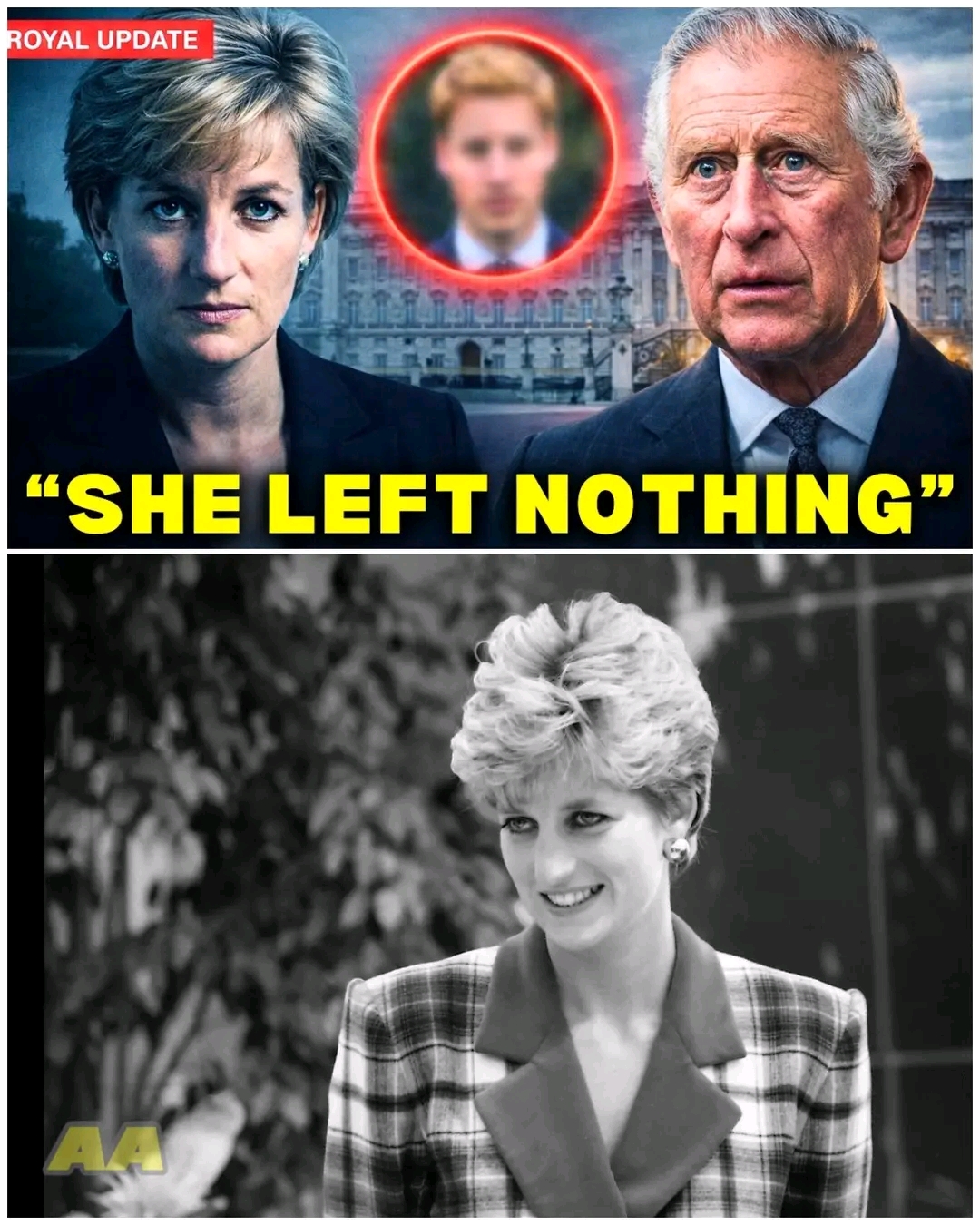
When Princess Diana died in 1997, many believed her fortune would quietly fold back into royal control. But when her will was unsealed, it revealed something far more personal—and far more deliberate. The truth about who inherited her estate, and how it was structured, tells a story not of palace conspiracy, but of a mother determined to protect her sons and her causes long after she was gone.
Princess Diana’s life was lived under a spotlight so intense that even her final wishes became the subject of speculation. In the years since her death, dramatic claims have circulated suggesting secret trusts, hidden clauses, and rebellious financial schemes designed to undermine the monarchy. But what did Diana’s will actually say—and who truly inherited her estate?
When Diana finalized her divorce from Prince Charles in 1996, she received a settlement reported at approximately £17 million, along with an annual allowance to maintain her private office. She also retained her Kensington Palace apartment and certain personal possessions, including jewelry and family heirlooms.
For the first time since her marriage, Diana had full personal control over substantial wealth. And with that independence came careful planning.
In July 1996, she signed her will.
Contrary to sensational claims that she left her entire estate to one outsider, Princess Diana left the vast majority of her estate to her two sons, Prince William and Prince Harry.
After taxes and expenses, her estate was estimated at roughly £12–13 million. She directed that it be placed in trust for her sons, to be divided equally.
Originally, the terms specified that they would receive their inheritance at age 25. Following her death, the executors—her mother, Frances Shand Kydd, and her sister, Lady Sarah McCorquodale, along with financial advisers—reportedly amended the arrangement so that full access would come at age 30. Until then, the funds were invested and managed on their behalf.
By the time both princes reached maturity, the estate had grown significantly due to investment performance.
Diana’s central focus was clear: secure her sons’ financial independence outside direct royal control.
Diana also directed that a portion of her personal estate be distributed to charities she supported. During her lifetime, she was deeply involved in causes related to HIV/AIDS, homelessness, cancer care, and landmine removal.
After her death, the Diana, Princess of Wales Memorial Fund was established and went on to distribute millions to charitable initiatives around the world before closing in 2012. Her humanitarian priorities continued through both her sons’ charitable foundations.
Her will reflected the values she had embraced publicly in her final years: compassion, advocacy, and global responsibility.
One of the most talked-about aspects of Diana’s estate involves Paul Burrell, her former butler.
Burrell was named as one of several executors in an earlier version of her will. However, shortly after her death, he was removed as executor by surviving trustees and was not the sole controller of her estate.
While Burrell later became a controversial public figure—particularly during his 2002 trial over possession of Diana’s belongings—he did not inherit her estate, nor did he have unchecked authority over her finances.
In fact, the 2002 trial collapsed after it was revealed that he had informed the Queen he was safeguarding certain items. He was acquitted, and the case highlighted the emotional complexity surrounding Diana’s personal effects—but it did not prove financial misconduct or secret control of her wealth.
Burrell later wrote memoirs and spoke publicly about Diana, actions that drew criticism from Princes William and Harry. But those media decisions were separate from the structure of her will.
Claims of a hidden “shadow trust” designed to fund anti-monarchy campaigns or secretly influence political movements are not supported by verified legal documentation.
No credible evidence has emerged showing that Diana established covert offshore funds or secret clauses aimed at undermining the royal institution. Official probate records outline a conventional estate structure: trusts for her sons, designated charitable distributions, and appointed executors.
Speculation has often grown from the intense public fascination surrounding her life and tragic death. But legally, her estate followed established British inheritance practices.
While the legal structure of Diana’s will was relatively straightforward, its emotional consequences were profound.
Her sons inherited not only financial security but also the weight of her global legacy. Both have spoken about the difficulty of growing up in the shadow of her death.
Prince William has continued her charitable focus through mental health initiatives and conservation efforts. Prince Harry has often framed his own humanitarian work as inspired directly by his mother’s example.
Diana’s estate did not become a weapon against the monarchy. Instead, it became a foundation for her sons’ independence—financially and philosophically.
Princess Diana understood the power of symbolism. She knew that every gesture she made carried meaning. Her will was no exception.
She ensured:
Her sons would be financially secure.
Her wealth would not automatically revert to royal institutional control.
Her charitable priorities would continue.
Her personal possessions would remain within her family.
These were not reckless or rebellious decisions. They were thoughtful, maternal, and strategic.
In the end, Diana did not need secret clauses or hidden trusts to shape history. Her legacy was powerful because it was public. Her humanitarian work helped change attitudes toward HIV/AIDS. Her advocacy accelerated momentum behind the landmine ban treaty. Her emotional honesty altered how the world viewed monarchy itself.
Her estate simply ensured that her voice would not disappear with her.
Princess Diana’s final act was not a dramatic financial revolt. It was something quieter—and perhaps stronger.
She protected her children.
She honored her causes.
And she secured her story on her own terms.
That changes everything.

💬 “Do You Believe in Signs? What Happened During This Visit to Queen Elizabeth II’s Resting Place Is Leaving People Divided — Find Out Why”

🔥 “This Single Touch Changed Everything: The Powerful, Unspoken Moment Between Catherine, Princess of Wales and Prince William You Need to See”

⚠️ “Pay It Back or Go to Jail? The Controversial Debate Over Congress and USAID Funds Explained — Click to Learn More”

⚖️ “Death Penalty for Undocumented Immigrants? Trump’s New Order Is Changing U.S. Law Overnight — Read the Full Breakdown”
⚖️ “Death Penalty for Undocumented Immigrants? Trump’s New Order Is Changing U.S. Law Overnight — Read the Full Breakdown”

— Popełnił dużo strat i błędów w kluczowych momentach, zupełnie nie przypominał siebie z wcześniejszych występów — mówi na łamach WP SportoweFakty Diogo Pereira. Dziennikarz portugalskiego zerozero.pt dość krytycznie ocenił ostatni występ Oskara Pietuszewskiego w barwach FC Porto. Padło jednak też kilka słów, które napawają optymizmem. 🟥 Link w komentarzu👇

Świątek zrobiła mega wrażenie na … 👍💪

Matylda Damięcka ponownie zaskakuje swoją grafiką, która szybko zdobyła popularność w sieci. Tym razem jej praca dotyczy Donalda Trumpa.

W kraju zapanowało wielkie poruszenie❗️😱

— To niewiarygodne. […] Jeśli nie doszło do rozmowy, to z jego strony jest to zrozumiałe rozczarowanie — mówi w programie “Love All” słynny Kim Clijsters. Legendarna tenisistka w ostrych słowach skomentowała zakończenie współpracy nowego trenera Igi Świątek Francisco Roiga z tenisistą Giovannim Mpetshi Perricardem. 🟥 Link w komentarzu👇
