
CELEBRITY
Trump’s iron grip on congressional Republicans is weakening

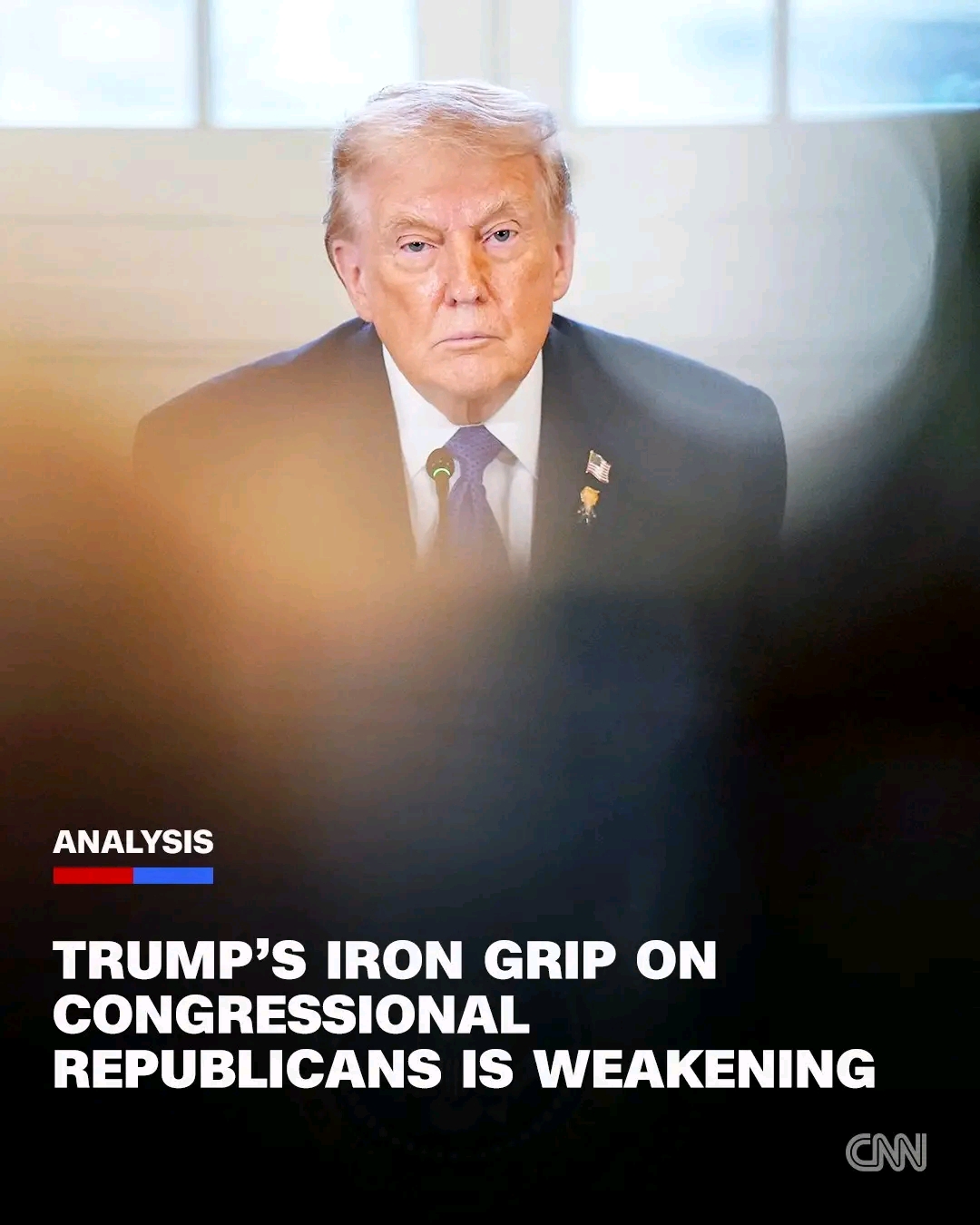
President Donald Trump this week lashed out at congressional Republicans like he rarely has before.
He got so mad at a handful of Senate Republicans on Thursday that he said five of them – roughly 1 out of every 10 – “should never be elected to office again.” His list of offenders even included one, Sen. Susan Collins of Maine, who might be the most vulnerable Republican in the 2026 election. (One of Collins’ Democratic opponents, Maine Gov. Janet Mills, had some fun with this.)
It was an extraordinary day for Republicans, from whom Trump expects fealty, showing their nerve.
The signs have been growing for a while now that Republicans are starting to grow a little more comfortable casting votes against Trump, most notably at the state level last month in Indiana. And this week such votes in Congress came fast.
Most or all of the votes are likely to be symbolic and don’t appear to have adjusted the president’s course – at least yet. And there remains plenty of evidence that fear of Trump is still an animating principle in the GOP.
But the rebukes were symbolic on some pretty significant issues. And they provide growing evidence that Trump, whose power relies on the domination of his party, is losing his iron grip on it.
The Senate War Powers vote
Perhaps most striking was the five Senate Republicans who voted to advance a measure limiting Trump’s power to launch further military strikes in Venezuela – the vote that drew Trump to lash out on social media. The measure is expected to pass the chamber next week.
While some GOP defections were expected, the volume of them was surprising. Trump even lost the vote of oft-loyalist Sen. Josh Hawley of deep red Missouri.
The vote also raises the real prospect that both Republican-controlled chambers of Congress could vote to check Trump’s power here, when the House votes later this month on a similar measure.
(Two House Republicans bucked Trump last month before the Venezuela strike, when a similar vote narrowly failed. And the GOP’s majority in that chamber has since shrunk.)
Even if both chambers passed the same piece of legislation checking Trump’s authority, he could just veto it.
But the symbolism here is huge – especially as the president eyes a more in-your-face and expansionist foreign policy in the Western Hemisphere, including with his play for Greenland (which we’ll get to). Much of that relies on the threat of military force, whether explicit or implicit, but Congress and these Republicans aren’t playing ball and are undermining his leverage.
The House votes
Thursday was a particularly inauspicious day for Trump in the House.
Across a trio of votes – two attempting to override his vetoes on local projects and a much-bigger vote to extend the lapsed enhanced Obamacare subsidies for three years – Trump lost the votes of 35, 24 and 17 House Republicans.
As percentages of House Republicans voting, those amounted to 16.5%, 11% and 8% of the conference. Those are not overwhelming percentages, but they do represent significant portions of the party, the likes of which we don’t often see, all the same day.
And the Obamacare vote is especially troubling for Trump. The subsidies were the crux of the government shutdown late last year, and Trump has resisted extending them. He has instead signaled a desire for a more GOP-friendly proposal. But Republicans seem to be losing patience and worrying greatly about the expiration of the subsidies blowing back on them in the midterms.
(A handful of them previously cued up this vote by signing a “discharge petition” forged by House Democratic Leader Hakeem Jeffries – a hugely symbolic rebuke of the president in and of itself.)
Much has yet to play out, but the pressure is growing on Trump to consent to something that would once have been unthinkable for him: subsidizing Obamacare. And Thursday’s vote, which succeeded easily, 230-196, clearly upped the pressure.
The other stuff
A couple other developments are also worth noting in this context.
One was Republican Sen. Thom Tillis of North Carolina forcing through a bill by unanimous consent that would display a long-delayed plaque honoring law enforcement who defended the US Capitol on January 6, 2021.
The reason that was significant? It came just days after Trump’s White House launched one of its most brazen efforts to rewrite the history of January 6 – effectively blaming the police for the riot in a factually ridiculous timeline released on the fifth anniversary.
And on the foreign policy front, we saw a rather remarkable number of warning shots – from Senate Republicans, especially – when it came to Trump’s designs on adding Greenland through coercion or even military force. Several regular Trump allies cast his play as ridiculous and potentially damaging to the NATO alliance.
What it means
Trump’s critics will be tempted to label some or all of these rebukes as thin gruel. None of the measures that passed Thursday thanks to GOP crossovers are likely to become law. Republicans could certainly go a lot further to bind Trump’s hands on something like Greenland, if they wanted to.
There is also thus far limited evidence that any of their efforts to check Trump have forced him to change his course and relent.
And in fact, CNN’s Annie Grayer reported Friday on how Trump’s threats after the Senate war powers vote actually dissuaded some House Republicans from voting to override Trump’s vetoes. Clearly, Trump’s wrath still matters.
But many of these examples apply significant pressure, even just as statements of intent. Republicans seem to be warning Trump to avert his course on some huge issues – especially his taste for imperialism and the health care debate.
And the fact remains that this just isn’t normal. I wrote in October about how rare it was for congressional Republicans to vote against Trump. Now we have it happening on multiple issues … in both chambers … on the same day.
And that’s a dangerous development for Trump, because he needs these Republicans to fear him and stay in line in order to continue wielding his often-unchecked power. For whatever reason, his and the White House’s response to the Indiana vote last month didn’t do the trick. Republicans appear emboldened to vote against him.

ROYAL SHOCKER: Meghan Markle Drops a Stunning Ultimatum to King Charles — And the Palace Isn’t Ready 😳👑

Kościół w Polsce przygotowuje się na wypadek konfliktu. Jest gotowy na najgorszy scenariusz

Kryzys będzie tylko się nasilał. To może być wyjątkowo trudne lato dla branży lotniczej

Ludzie byli przerażeni 😱

Prezydent Karol Nawrocki podjął dwie kluczowe inicjatywy dla polskiej wsi. Co zawiera specjalny list do premiera Tuska?

Ale przystojniak! 😍

— Zostanę tu na długo. Pamiętajcie, że Real Madryt to klub moich marzeń — powiedział Vinicius Junior. Ma zarabiać ogromne pieniądze. 🟥 Link w komentarzu👇

“Umowa była taka, żeby ‘nie cisnąć’ na maksa, to nie odpuścił i 150 kg na ławce pękło!” – chwalił prezydenta Pudzianowski

To najgorsze miejsca w samolocie. Koniecznie ich unikaj lecąc na urlop
