
CELEBRITY
US Unveils Interim Trade Framework With India, Drops Punitive Tariff

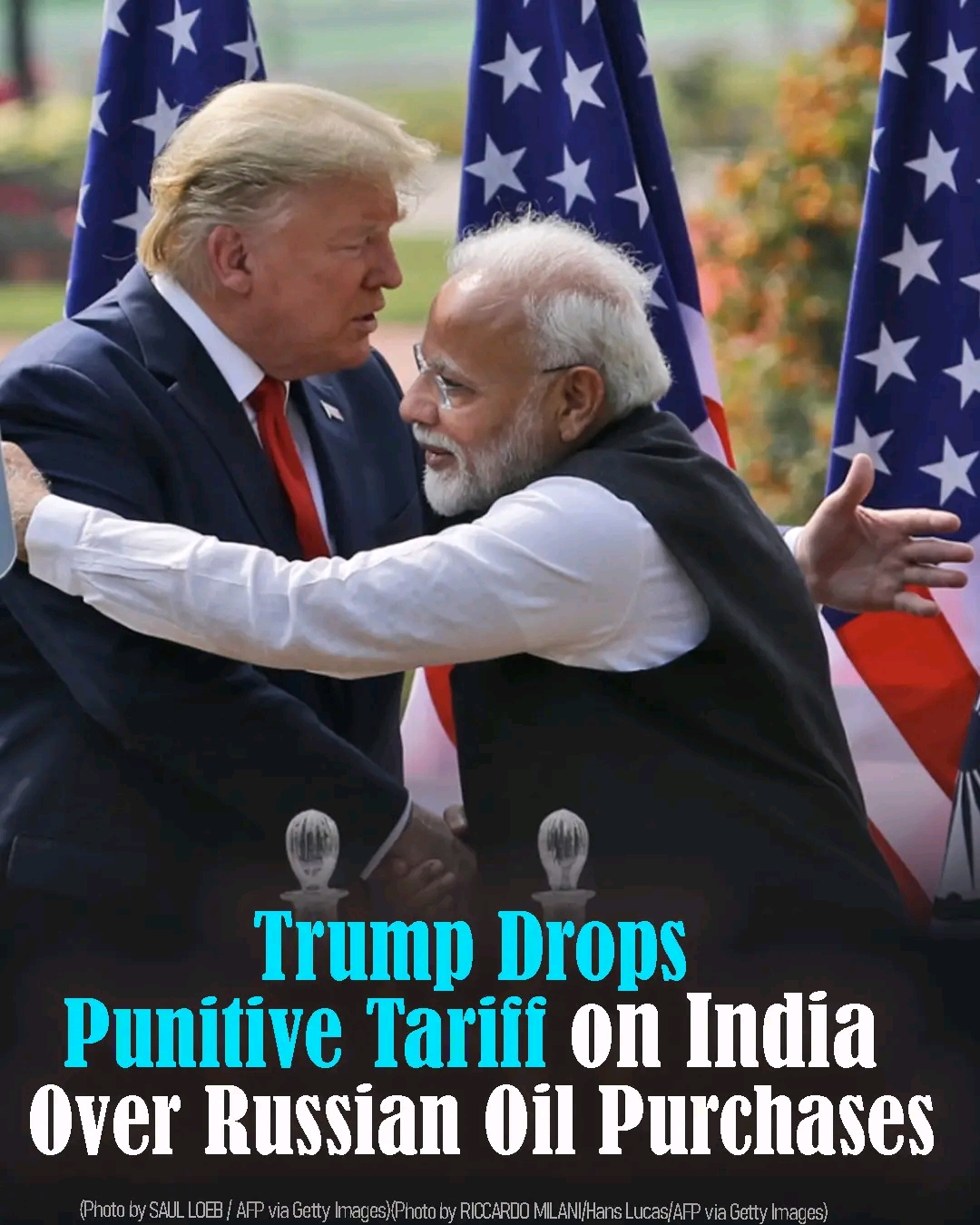
The U.S. just removed a 25% punitive tariff on Indian imports — after India agreed to stop buying Russian oil and purchase about $500 billion in American energy, metals, and other goods.
That sounds geopolitical.
But the real effect shows up much closer to home.
Lower tariffs generally make imported products cheaper — while higher U.S. exports support domestic jobs tied to energy, agriculture, and manufacturing.
So this isn’t only foreign policy.
It’s part of how Washington tries to balance prices at the store vs jobs at home.
Trade policy often feels abstract — until it quietly affects what things cost and where paychecks come from.
Donald Trump removed a 25 percent punitive tariff on all imports from India over its purchases of Russian oil, the White House announced Friday.
“The Interim Agreement between the United States and India will represent a historic milestone in our countries’ partnership, demonstrating a common commitment to reciprocal and balanced trade based on mutual interests and concrete outcomes,” the two countries said in a joint statement.
Trump agreed to slash U.S. tariffs on Indian goods to 18 percent from 50 percent in exchange for India halting its purchases of Russian oil and opening markets to American goods.
The India-U.S. joint statement did not mention India’s Russian oil purchases or a formal pledge from India to confirm the move.
Trump announced a deal with India on Monday to cut U.S. tariffs on Indian goods to 18% from 50% in exchange for India halting purchases of Russian oil and lowering trade barriers.
Half of the 50% rate had been imposed separately by Trump as punishment for India’s purchases of Russian oil, which he said were fuelling Moscow’s war effort in Ukraine. Trump signed an executive order on Friday rescinding that 25% portion after India agreed this week to shift its oil buying to the U.S. and Venezuela.
However, the statement indicated that New Delhi resisted Washington’s push to broadly open its agricultural market.
Trade Minister Piyush Goyal said the agreement safeguards farmers’ interests and rural livelihoods by “completely protecting sensitive agricultural and dairy products”.
Imports of genetically modified agricultural products would not be directly allowed as there was no such provision in the pact, while fruits like apples would allowed under a tariff quota, he said at a press briefing.
On Russian oil, Goyal declined to comment, saying the foreign ministry would respond.
India’s opposition Congress party, however, said the trade deal was concluded on U.S. terms and hurt farmers and traders, calling the pact a “complete surrender” of national interests.
NEW DETAILS ON TARIFF REDUCTIONS
Friday’s joint statement, opens new tab provides additional details compared with initial outlines of the trade deal revealed by Trump on Monday.
It confirms that India will purchase $500 billion in U.S. goods over a five-year period, including oil, gas, coking coal, aircraft and aircraft parts, precious metals, and technology products. The last category includes graphics processing units, typically used for AI applications, and other goods used in data centers.
It said India would eliminate or reduce tariffs on all U.S. industrial goods and a wide range of U.S. food and agricultural products, including dried distillers’ grains and red sorghum for animal feed, tree nuts, fresh and processed fruit, soybean oil, wine and spirits.
U.S. TO KEEP 18% TARIFF
But the deal will apply an 18% tariff rate on most imports to the U.S. from India, including textiles and apparel, leather and footwear, plastic and rubber, organic chemicals, home decor, artisanal products and certain machinery.
India will get the same tariff relief granted to other allied countries that have signed trade deals with the United States on certain aircraft and aircraft parts, and will receive a quota for auto parts imports that will be subject to a lower tariff rate, according to the statement.
Depending on the results of the Trump administration’s tariff investigation into pharmaceuticals and their ingredients, “India will receive negotiated outcomes with respect to generic pharmaceuticals and ingredients,” the statement said.
Goyal hailed the framework agreement as opening a market worth $30 trillion – the U.S. annual GDP – to Indian exporters, especially farmers, fishermen, and micro and small-to-medium enterprises.
Goyal had said on Thursday that Washington and New Delhi aimed to sign a formal trade agreement in March, after which India’s tariff cuts on U.S. exports would go into effect.
ACCEPTING U.S. STANDARDS
India also agreed to address longstanding non-tariff barriers on imports of agricultural products, medical devices and communications gear, with negotiations to be completed within six months on an agreement to accept U.S. or international safety and licensing standards for product imports.
The U.S. affirmed that it intends to consider India’s requests for lower tariffs on Indian goods during further negotiations of the bilateral trade agreement. The two sides also agreed to cooperate on enforcement of export controls on sensitive technologies and take actions to address “non-market policies of third parties,” a reference to China.
The United States and India have struggled for years to conclude a full trade deal, with disputes spanning agriculture, digital trade, medical devices and market access. But strategic concerns — including competition with China, supply-chain diversification and energy security — have injected new urgency into talks, officials in both countries say.

Just In: “You Won’t Believe What Iran Just Said About Tourist Destinations Worldwide — Click to See the Full Warning”

Just In :Donald Trump INSULTS Michelle Obama as “UGLY” — Barack Obama’s RESPONSE LEAVES the NATION STUNNED! click here for more details

O tym nie wiedzieli, nawet jego fani👇

Jak to możliwe❓Post natychmiast wyświetliło tysiące fanów😱

NSA nakazał wpisanie małżeństwa jednopłciowego do rejestru. Chodzi o ślub zawarty w Berlinie

JUST IN: 🇮🇷🇺🇸🇮🇱 Iranian Brigadier General Abolfazl Shekarchi announced that Iran will hunt down all pilots, commanders and other participants in the attack on Iran in the coming years

Michał Wiśniewski zaskoczył fanów nową piosenką, która porusza temat zakończonej relacji. Co skrywa jego najnowszy utwór?

Marta Nawrocka leci do USA. Pierwsza taka wizyta bez prezydenta

Po tym ciosie nigdy się nie podniosła 💔

Z ostatniej chwili, wielu tylko na to czekało, huczy o tym cała Polska 😱

Czysta radość❗🥲 ➡
