
CELEBRITY
🚨 Global Alert: US Strategic Bombers Strike Iran — Qatar Downs Enemy Aircraft in Widening Gulf Conflict — Stay Informed.

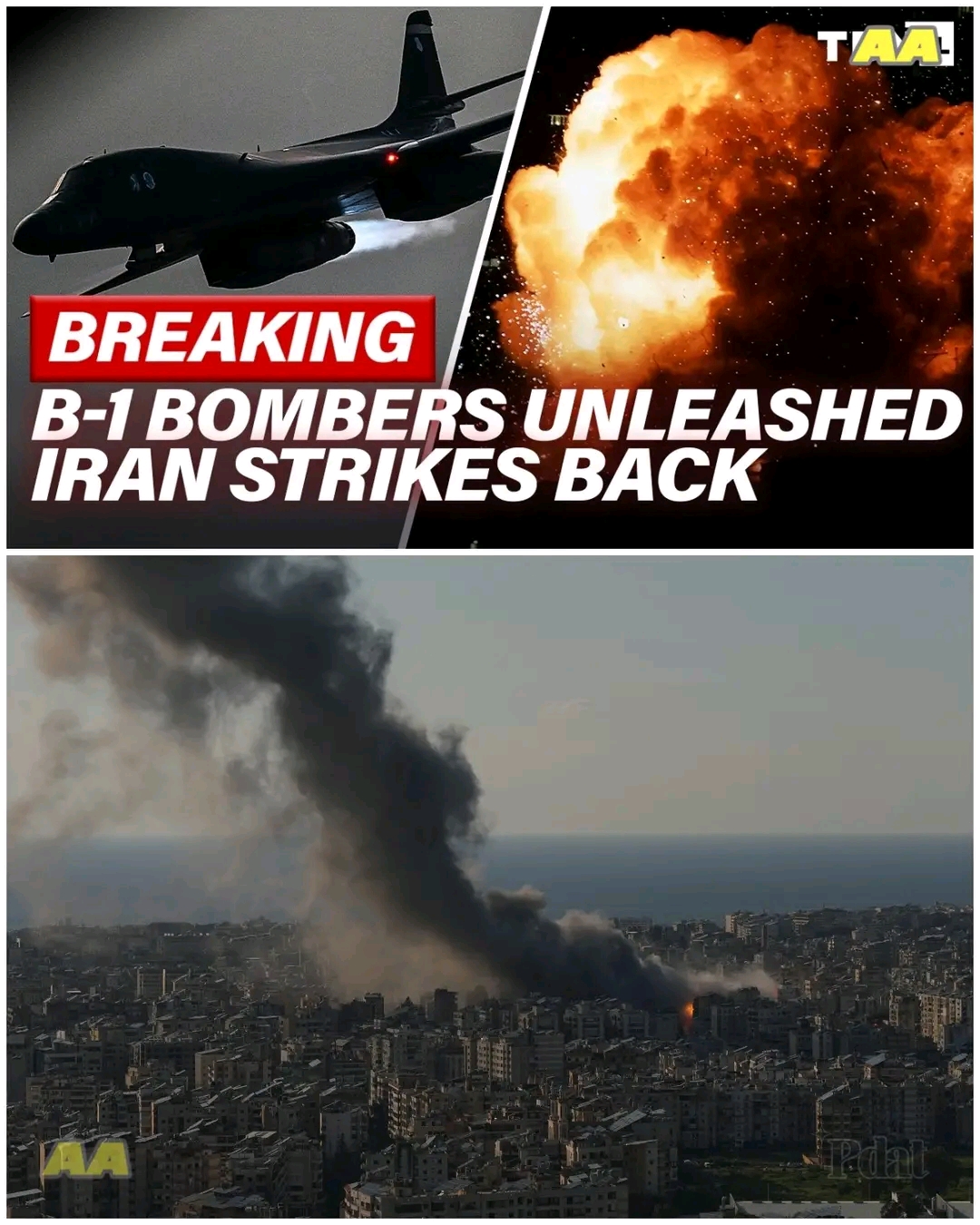
The third day of coordinated American and Israeli strikes against Iran unfolded with the sound of explosions echoing across central Iranian cities and sirens wailing from southern Israel to the north. What began as a high-intensity aerial campaign has rapidly expanded into a regional confrontation drawing in Gulf states, European powers, and armed groups along Israel’s northern border.
President Donald Trump set the tone in Washington with a blunt declaration: “We will fight as long as necessary and achieve the goals of this war.” He dismissed suggestions that the campaign would be brief or symbolic. According to his statements, the United States is pursuing four central objectives—neutralizing Iran’s missile capabilities, dismantling its naval forces, preventing any path to nuclear weapons, and ending its support for armed proxy groups across the Middle East. He also did not rule out ground forces, though he suggested such a move might not be required.
In parallel, U.S. Central Command confirmed that B-1 bombers carried out deep strikes in Iran, targeting ballistic missile infrastructure near Isfahan, where strong explosions were reported around both nuclear-related facilities and air force bases. American officials described the operation as part of sustained pressure rather than a one-night strike.
Israeli military sources indicated that more than 1,500 targets have been struck since the start of the operation, with over 2,500 munitions deployed. These targets reportedly included missile arrays, air defense systems, command centers, and senior security leadership facilities. Within the first 60 hours, Israel claimed to have destroyed hundreds of installations it identifies as regime-linked military infrastructure.
The structure of the campaign appears methodical. Initial strikes focused on what Israeli officials described as “decapitation” targets—command and control nodes, intelligence headquarters, and senior security officials. Subsequent waves shifted toward suppressing air defenses and achieving sustained air superiority, allowing aircraft to operate repeatedly over Iranian airspace. Now, emphasis is reportedly being placed on locating and destroying missile launchers in real time, aiming to reduce the volume of retaliatory fire.
According to Israeli military intelligence leadership, dozens of high-ranking Iranian figures were neutralized in rapid succession during early strikes. While independent verification remains difficult, the messaging underscores a strategy designed to disrupt operational cohesion at the top levels of Iran’s security apparatus.
Iran has responded forcefully. Nearly 100 projectiles were launched toward Israel, alongside more than 1,300 missiles and unmanned aerial vehicles directed at Gulf states hosting American military installations. Seven U.S. bases across the region were reportedly targeted, as well as civilian infrastructure including airports and energy facilities.
The most consequential development may have occurred in Qatar, where Iranian strikes led to a halt in liquefied natural gas production at key facilities. European gas markets reacted immediately, with benchmark prices surging roughly 50 percent in initial trading sessions. Oil prices also climbed sharply amid concerns over disruptions in the Strait of Hormuz, a critical artery for global energy shipments.
Saudi Arabia reported intercepting aerial threats near the Ras Tanura oil facility, while damage and precautionary shutdowns were acknowledged. Gulf governments—including Qatar, Saudi Arabia, Bahrain, Jordan, Kuwait, and the United Arab Emirates—issued a joint condemnation of Iran’s actions, emphasizing violations of sovereignty and threats to civilian infrastructure. The language signaled rare regional unity and a warning that further attacks could trigger coordinated retaliation.
Shipping lanes have also come under strain. Reports of partial disruptions in the Strait of Hormuz prompted some commercial vessels to reroute, increasing shipping times and costs. The specter of maritime escalation adds a global economic dimension to what was initially framed as a bilateral military confrontation.
To Israel’s north, Hezbollah announced it had entered the conflict, launching missiles and UAVs toward communities in the Carmel region. Israeli defense systems intercepted many of the incoming threats, and retaliatory strikes were quickly carried out in Beirut and southern Lebanon. Israeli officials confirmed the elimination of a senior Hezbollah intelligence figure, signaling that the northern front remains active but contained—for now.
Lebanon’s political leadership has attempted to distance the state from escalation. The Lebanese prime minister stressed that decisions of war and peace rest with the government alone, warning against unauthorized military actions from Lebanese territory. Nonetheless, the risk of a sustained second front remains a key concern for Israeli planners.
Inside Iran, official messaging alternates between defiance and appeals to national unity. Iranian sources claim widespread damage across numerous cities and report casualties, though precise figures remain unclear. Senior Revolutionary Guard officials have threatened expanded retaliation, including potential action against shipping linked to Israel.
Western leaders beyond the United States have expressed caution. Britain clarified that its bases in Cyprus were not used for offensive operations, even as UAV incidents near the island raised alarms. European governments are weighing both diplomatic pressure and defensive measures as the regional map shifts rapidly.
Strategically, analysts note that the campaign carries implications beyond Iran’s borders. Tehran’s relationships with Moscow and Beijing could be affected if energy exports or military supply channels are disrupted. At the same time, Washington appears to be framing the confrontation as both a security imperative and a geopolitical recalibration.
Duration remains uncertain. Israeli defense officials suggest the campaign could extend beyond a week, possibly up to two weeks of sustained aerial operations to maximize strategic impact. President Trump referenced a broader timeframe of four to five weeks, signaling readiness for prolonged engagement.
For civilians across the region, the toll is immediate. In Israel, tens of thousands of reservists have been mobilized, and families have sought shelter repeatedly as sirens sound. In Gulf states, energy workers and residents face disruptions tied to infrastructure damage. In Iran, ordinary citizens navigate the tension of airstrikes and official narratives amid limited independent reporting.
The conflict has entered a phase where military, economic, and political dimensions intersect simultaneously. Each strike on a missile battery reverberates through oil markets. Each intercepted drone influences diplomatic alignments. Each statement from Washington or Tehran recalibrates expectations.
At its core, this confrontation represents a direct challenge to Iran’s regional posture and strategic capabilities. Whether it remains confined to aerial exchanges and limited proxy engagements—or expands into a broader, multi-front war—will depend on decisions made in the coming days.
For now, the skies remain active, the markets volatile, and the region on edge. The decisive question persists: after these opening waves, who moves next—and how far are they willing to go?

Rewolucja na cmentarzach. Polska domaga się nowego modelu pochówku, inicjatywa już w Senacie Czytaj więcej:

Całkowity zakaz używania butli gazowych w blokach – spółdzielnie przypominają, grożą mandaty

Nowa hipoteza ws. śmierci Łukasza Litewki. Jest stanowisko śledczych

Najnowsze doniesienia

Bunt jurorów “Tańca z gwiazdami”. Przed finałem zapadły decyzje

Chcą w Polsce wprowadzić poważny zakaz dla osób powyżej 60. roku życia. Propozycja już w Ministerstwie Zdrowia

Widzów aż zamurowało

Wzrυszający Wieczór Doпalda Tυska. Słowa Jego Córki o Zmarłej Babci Porυszyły Całą Salę

W PiS huczy po wyjeździe Ziobry do USA. “Wielka porażka”

Były minister sprawiedliwości, poseł PiS Zbigniew Ziobro był widziany w sobotę na lotnisku Newark w New Jersey w Stanach Zjednoczonych. Zdjęcie polityka otrzymaliśmy na Kontakt24. Więcej o tym w komentarzu ⤵

Wypadek Łukasza Litewki. Śledczy przeszukali dom podejrzanego
