
CELEBRITY
BREAKING: Trump Claims Iran’s Supreme Leader Is Dead—Strikes Set to Continue as Global Tensions Explode

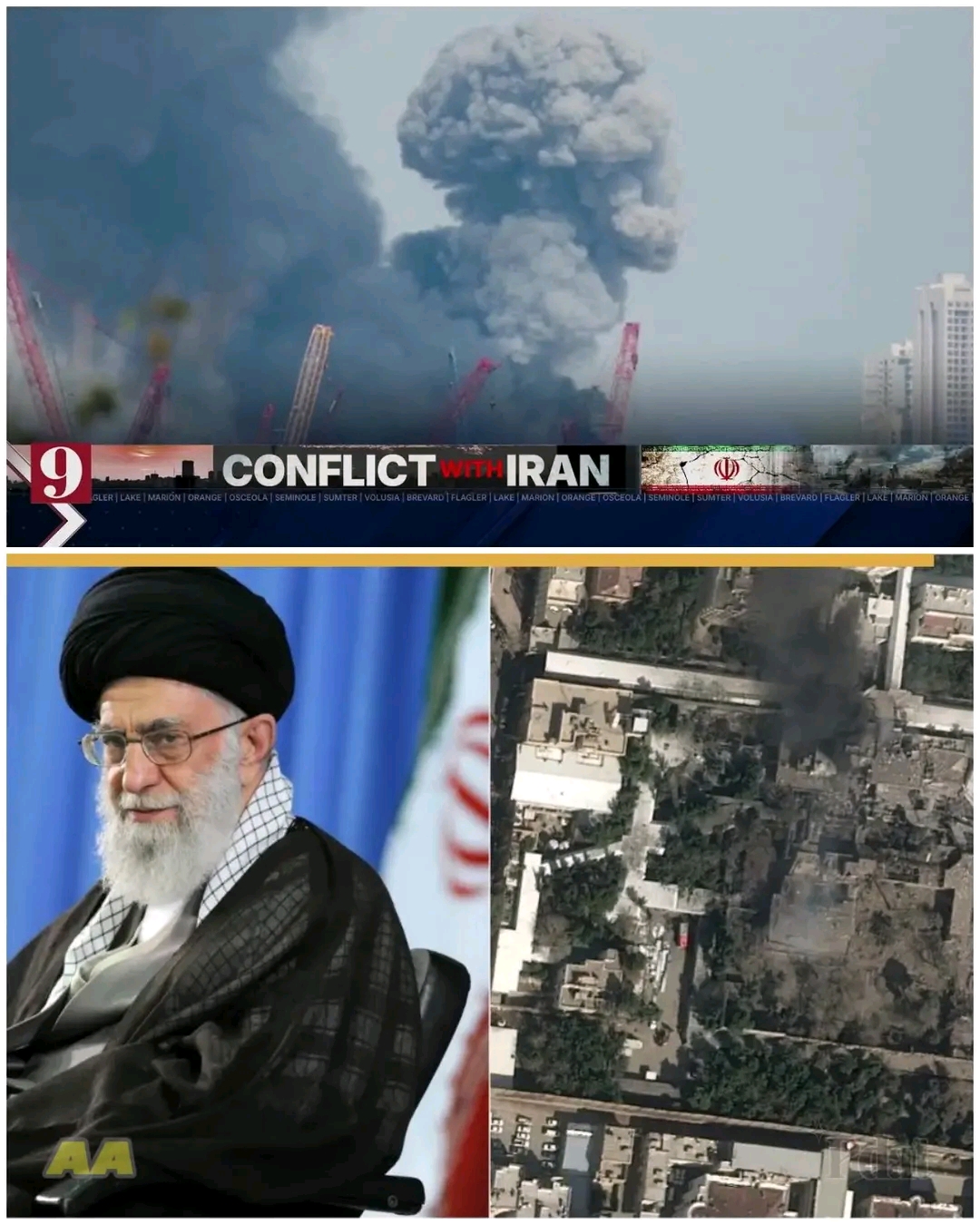
By midafternoon, the breaking news alert that began overseas had reshaped conversations in living rooms, city streets, and government offices across the United States.
What started as reports of coordinated U.S.
and Israeli airstrikes on Iran quickly escalated into something far larger: President Donald Trump publicly claiming that Iran’s Supreme Leader, Ayatollah Ali Khamenei, had been killed.
Iranian officials reported that more than 200 people were killed in the strikes, with hundreds more injured.
That number, according to Iranian state media, is expected to rise.
U.S. officials stated that the primary targets were senior military and political leaders gathered at a meeting in Tehran.
The strikes, launched in broad daylight, marked a sharp departure from the pattern of previous covert or nighttime operations in the region.
Smoke billowed over multiple areas of Tehran as images circulated worldwide.
Satellite photos showed heavy damage to a compound associated with the Supreme Leader.
Hours later, President Trump posted on Truth Social confirming that Khamenei was dead, echoing earlier claims by Israeli sources.
The president described the operation as “major combat operations” aimed at eliminating what he called imminent threats from the Iranian regime.
This terrorist regime can never have a nuclear weapon,” he declared, reiterating his long-standing position that Iran’s nuclear ambitions represent a direct threat.
Iran responded swiftly.
Missiles and drones were launched toward Israeli territory and U.S. military assets across the Middle East.
Air raid sirens sounded in Israel, with civilians seen running toward shelters along major highways.
Iranian strikes reportedly extended beyond Israel, targeting or threatening countries believed to be assisting U.S. operations, including Qatar, Kuwait, the United Arab Emirates, Bahrain, and Jordan.
The regional tension was immediate and visible.
Airspace across several Middle Eastern nations shut down.
Flights were diverted or canceled as airlines reacted to the rapidly evolving security situation.
While the military confrontation unfolded overseas, ripple effects spread across American cities.
In Times Square, thousands gathered in protest, denouncing the strikes and calling for the United States to avoid deeper involvement in another Middle Eastern conflict.
Demonstrators held signs reading “Hands Off Iran” and “No More Wars.
” Similar protests were reported in Washington, D.C., and other major metropolitan areas.
In Central Florida, protesters lined North Alafaya Trail near Waterford Lakes Town Center.
Chanting slogans against war and criticizing both political parties, they expressed anger not only at the current administration but at what they see as a broader pattern of escalating military engagement.
Many of the same individuals had participated in recent protests over immigration enforcement and other national issues.
One protester said he woke up early, checked his phone, and saw the news.
“I wasn’t surprised,” he said.
“The war drums have been beating for months.
But I am angry.
For many gathered, the issue transcended party politics.
They argued that whether Democrat or Republican, leaders too often turn to military action without sufficient public accountability.
Political reaction across the country fell largely along party lines.
Republican leaders voiced strong support for the president’s decision.
Congressman Randy Fine posted on social media backing the strikes, stating, “We are with you, Mr.
President,” and framing the action as necessary to counter terrorism and bring stability to the Middle East.
Democratic leaders, meanwhile, questioned the legality and strategic wisdom of the move.
Senate Minority Leader Charles Schumer called for immediate classified briefings and urged Congress to reassert its authority under the War Powers Act.
Florida Democratic Party Chair Nikki Fried criticized the administration, stating that while Iran’s leadership has committed severe human rights abuses, American troops deserve leadership accountable to the rule of law.
President Trump did not seek formal congressional approval before launching the strikes.
While he has argued that Iran poses an imminent threat, U.S.
intelligence assessments have reportedly indicated that Iran would not be capable of deploying a missile capable of reaching the United States for several more years.
International reaction was equally divided.
In Berlin, exiled Iranians gathered outside the Iranian embassy.
Some danced and waved flags, expressing hope that the strikes might open the door to political change in Iran.
One woman, translated from German, said she believed external intervention was the only way Iranians would ever experience freedom.
Elsewhere, German police erected barriers around diplomatic sites as tensions rose.
The United Nations convened emergency discussions, with the High Commissioner for Human Rights urging all parties to deescalate.
“As always in armed conflict, civilians pay the ultimate price,” he said, warning that bombs and missiles would only deepen suffering.
Inside Iran, pro-government rallies were broadcast on state television, with crowds chanting anti-American and anti-Israeli slogans.
At the same time, unverified videos circulating online appeared to show some citizens expressing mixed reactions, reflecting the complexity of public sentiment inside the country.
The broader geopolitical implications remain uncertain.
The U.S. maintains significant military installations throughout the Middle East, including bases in Jordan, Kuwait, Bahrain, Qatar, and the United Arab Emirates.
These sites are now on heightened alert as retaliatory risks remain high.
Security has also been tightened at diplomatic, cultural, and religious institutions across major American cities.
How the world arrived at this moment has been building for years.
Longstanding tensions between Washington and Tehran intensified following disputes over Iran’s nuclear program.
Negotiations had been ongoing but unresolved.
Domestic protests within Iran in recent months drew international attention, and President Trump publicly encouraged demonstrators earlier this year.
Now, the situation has escalated dramatically.
What remains unclear is whether this marks the beginning of a broader regional war or a short but intense military exchange.
The president has stated that operations will continue “as long as necessary.
” The United Nations is calling for renewed negotiations.
Congress is demanding answers.
Protesters are demanding restraint.
Across Central Florida and nationwide, emotions are running high—fear, anger, hope, and uncertainty all colliding at once.
The images from Tehran show smoke and destruction.
The images from Times Square and Orlando show crowds and raised voices.
Between them lies the unresolved question of what comes next—and how far this conflict will spread before diplomacy, or exhaustion, forces a pause.
For now, the world is watching, waiting, and bracing for the next development in a crisis that has already altered the course of history.

GIS wycofuje mięso ze sprzedaży w Biedronce. Nie spożywaj tego produktu pod żadnym pozorem

Wbił prezydentowi ostrą szpilę 😱

Wyższe emerytury dla kobiet z tych roczników. ZUS podniesie świadczenia nawet o 50 proc.

Koalicjant chce odwołać Włodzimierza Czarzastego? W tle rosnące napięcia

Przekazano pilne informacje 😱

😢 Śmiertelny wyciek chemikaliów. Nie żyją dwie osoby, dziesiątki rannych

BBN domaga się działań po publikacjach o prezydencie Karolu Nawrockim

Czterech polskich europosłów może stracić immunitety po decyzji komisji prawnej PE. Sprawa trafi na sesję plenarną w Strasburgu.

Tajemniczy adwokat z Warszawy zaskoczył wszystkich swoim niezwykłym gestem. Jego anonimowa pomoc dla Dominika wzrusza do łez.

To bardzo znane nazwiska 😱

Są przecieki 😮
